Table Decorating for Beginners: A Simple Order to Work In
A five-step order for decorating any table: look at it bare, choose a base layer, build one centerpiece, set the places, then add a finishing touch and stop.
A table crowded with nice things can still look unfinished, and a table with almost nothing on it can look considered. The difference is rarely what you own. It is the order you work in. Table decorating gets much easier once you stop adding pieces at random and build the table in layers, from the surface up.
The sequence below works for a weeknight supper for two or a full table of guests, on any shape of table. Each step has a detailed guide of its own, so this page keeps to the order and the reasons behind it.
The order at a glance
- Clear the table and look at it bare.
- Choose a base layer.
- Build one centerpiece.
- Set the places.
- Add one or two finishing touches, then stop.

Working in this order means the big decisions come first. A runner is hard to slide under a centerpiece that is already arranged, and plates are hard to space once small objects are scattered around them.
Step 1: Clear the table and look at it
Take everything off, including the things that live there every day. Wipe the surface, then stand back and note four facts.
- Shape. A rectangle has a long center line to decorate along. A round or square table has a single middle point, so one compact arrangement suits it better than a row.
- Size. Picture a plate at every seat. The space left in the middle is all the room your decoration really has.
- Surface. Wood with a grain you like is worth showing. A marked or very shiny top usually looks better partly covered.
- Seats. Count the people who will actually eat there and decorate for that number, not for the number of chairs.
Step 2: Choose a base layer
The base layer is whatever sits between the table and everything else. It sets the mood more than any other single choice, and you only need one, or two at most.
- Bare wood is relaxed and needs no ironing. It suits everyday meals and tables with a good surface.
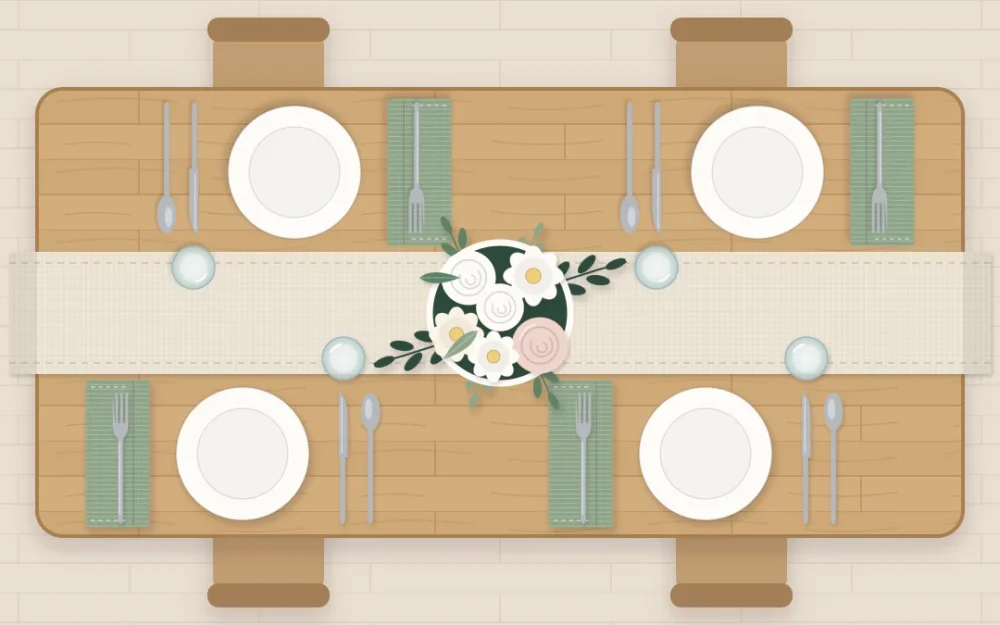
- A runner marks the middle and gives the centerpiece somewhere to sit. If you are unsure about length or direction, the guide to placing a table runner covers both.
- A tablecloth hides the surface entirely and makes the table feel dressed for an occasion.
- Placemats frame each seat and leave the middle of the table open.
A runner with placemats works. A cloth with a runner on top works. A cloth, a runner and placemats together usually feels like too much fabric for one table.
Step 3: Build one centerpiece
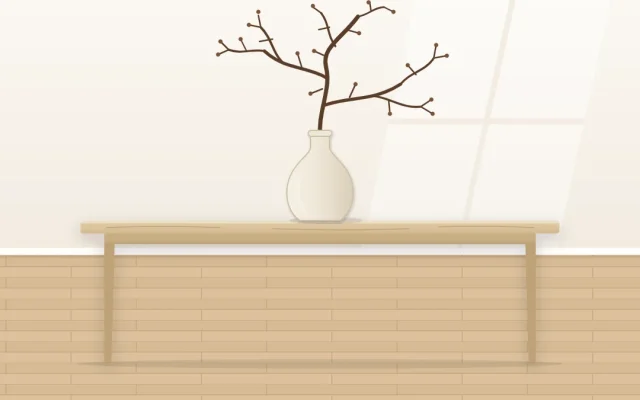
One is the important word. A single arrangement in the middle gives the eye a place to land, while three unrelated objects spaced along the table compete with each other. It does not have to be flowers: a wide bowl, a pitcher of branches or a few bud vases on a tray all do the job, and there are plenty of quick centerpieces made from things already in the house to borrow from.
Keep it either low or slim. As a rule of thumb, an arrangement under roughly 12 in (30 cm) tall is easy to see over from a chair, and a tall, narrow one is easy to see past. The awkward zone is a wide, bushy shape at face height.
Step 4: Set the places
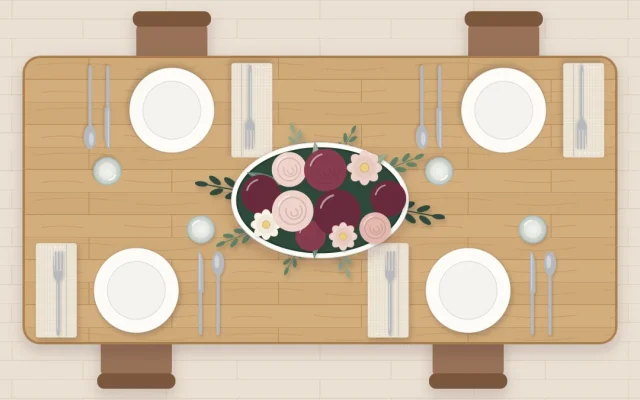
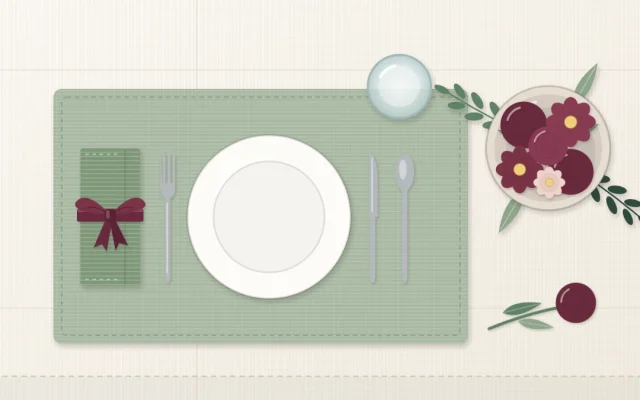
Now the plates, flatware, glasses and napkins go down. Put out only what the meal will use, and place every setting the same way so the table reads as one pattern instead of several separate ones. If you are never sure which side the fork goes on, keep the basic place setting layout open while you work.
Start with the plates alone. Space them evenly, check that each one lines up with its chair, and only then add the rest. About 24 in (60 cm) of table edge for each person is a common starting point for comfortable elbow room; squeeze in closer and the decoration in the middle has to shrink to make up for it.
Step 5: Add one or two finishing touches, then stop
This is the step where tables go wrong, because it is the enjoyable one. Choose one or two small extras and no more:
- a ribbon or a length of twine tied around each napkin
- a handwritten name card at each seat
- one extra bud vase at the far end of a long table
- a small dish that repeats the centerpiece color
Then leave the table for a few minutes and come back. If something catches your eye for the wrong reason, take it away. Removing one object improves a table more often than adding one.
Three checks before anyone sits down
Scale
Decoration should take up the space that is left after people and dishes have theirs. Set an empty serving dish where the food will go. If you have to move the centerpiece to make it fit, the centerpiece is too big for this meal.
Sight lines
Sit in two chairs that face each other. You should see the other seat clearly without leaning to one side. Anything that blocks the view gets lowered, thinned out or moved toward one end.
Tip
Always judge the table from a chair. Standing up, you look down on everything and nearly any height seems fine. Sitting down is how the table will actually be seen.
Color
Count the colors on the table, including the dishes and the wood. Two or three, each used more than once, look deliberate. Five or six that each appear a single time look accidental. If the count is high, swap out the odd pieces before adding anything new; the guide to choosing a table color palette shows how to narrow it down.
What to own first
You need very little to follow these steps. A set of plain plates, napkins in one color, one base layer that fits your table and one container for the middle will carry most meals. Add pieces slowly, and only when the same gap keeps showing up: a runner because the centerpiece always looks stranded, or a second set of napkins because the first clashes with a favorite cloth. A small collection in which everything goes together is easier to use than a large one that needs sorting every time.
Frequently asked questions
What should I buy first for decorating a table?
Start with the pieces every meal uses: plain plates, napkins in one color and a single container for the middle, such as a low vase or a wide bowl. Add one base layer that fits your table, either a runner or placemats. Everything else can wait until you notice the same gap more than once.
How do I decorate a small table without crowding it?
Set the plates first and see what space is left. On a small table that is often only a narrow strip or a small circle, so choose one compact centerpiece such as a single bud vase or a small plant. Skip the runner if it pushes the plates outward, and keep finishing touches on the napkins.
How many colors should a decorated table have?
Two or three is a comfortable number for most tables, counting the dishes and the table surface. What matters more than the count is repetition: a color that appears in the napkins, the flowers and one small object looks planned, while a color that appears once tends to look like a leftover.