Minimal Table Styling: A Calm Table With Very Few Pieces
How to make a pared-back table look calm instead of bare: one strong object, a restrained palette, deliberate empty space and a six-step edit of an over-decorated table.
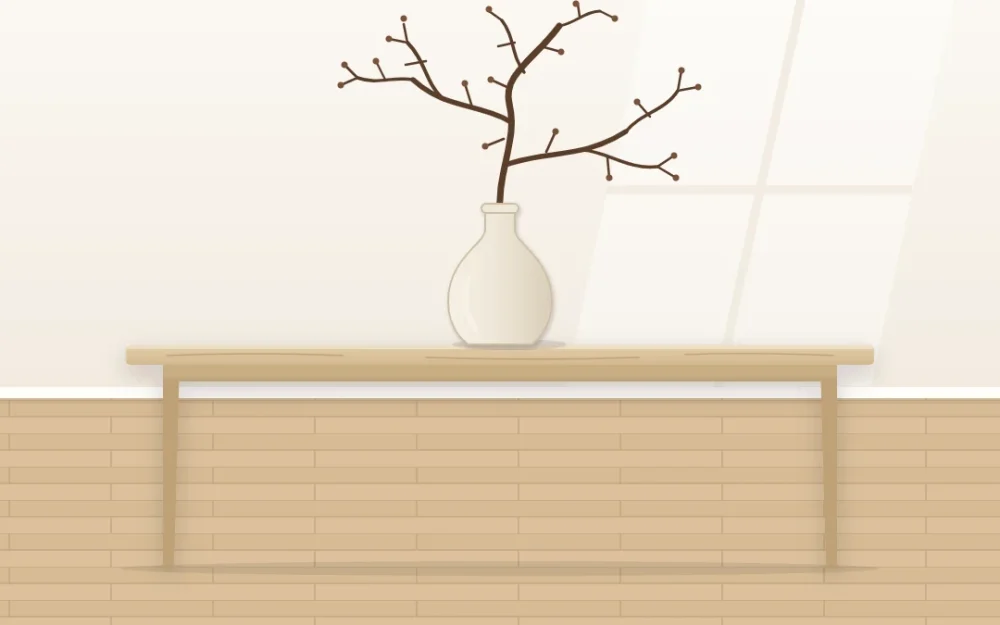
A nearly empty table can look serene or it can look as if someone forgot to finish. The objects are often identical in both cases. What makes minimal table styling read as calm instead of bare is that every remaining piece, and every stretch of empty surface, looks like a decision.
That is good news, because it means the style depends on editing more than on owning the right things. This guide explains what a pared-back table relies on, then walks through stripping an over-decorated table down to the few pieces that deserve to stay.
Minimal is edited, not empty
An undecorated table is one nobody has thought about: whatever landed there is still there, or nothing is. A minimal table has been thought about more than most. One object has been chosen over all the others, placed in a specific spot, and given enough clear space that you notice its shape.
The difference shows in three places. The object has presence, meaning a strong outline or a beautiful material. Its position relates to the table, centered or at a clear offset, never drifting. And the surface around it is clean and clear. Miss one of those and the table tips from calm to unfinished.
The four things a minimal table relies on
- One object or one tight group. A single vase, bowl or branch, or two to three pieces set close enough to read as one shape. This is the table’s focal point, and there is only one.
- A restrained palette. Two tones plus the table itself is plenty: ivory and oak, charcoal and walnut, white and pale gray. Color appears once, if at all.
- Empty surface as part of the design. The clear tabletop is not leftover space. It is the frame that makes the object visible, the way a wide mat sets off a small picture.
- Quality of line. With so little to look at, silhouette matters. One sculptural branch with an interesting bend, or one bowl with a clean curve, does more than a full bouquet.
Edit an over-decorated table, step by step
You probably own everything you need already. The work is in taking things away, in order.
- Clear the table completely. Move every object to another surface and wipe the top. Starting from zero is easier than removing things one at a time, because you see the table as a blank shape first.
- Look at the bare surface. Notice the grain, color and proportions. If the tabletop is handsome, plan to show most of it. If it is worn, a single plain runner can become the base instead.
- Choose the one best piece. From everything you took off, pick the object with the strongest shape or the material you like most. Ignore what is newest or most colorful.
- Place it deliberately. Put it at the exact center, or about a third of the way along the table’s length. Step back and check it from the doorway and from a chair.
- Add a second piece only if the first looks lost. On a long table, one small object can seem stranded. A low companion set close beside it, touching or nearly so, turns two things into one group.
- Put everything else away. Not on the sideboard next to the table: into a cupboard. The pieces you removed can take their turn another month.
Tip
Live with the edited table for a day before judging it. A pared-back surface can feel stark for the first hour simply because you are used to seeing more there.
Alignment matters more when there is less
On a full table, a vase that sits a little off is hidden by everything around it. On a minimal one, the eye has nothing else to check, so small errors stand out. A piece that is almost centered looks like a mistake; a piece that is clearly off-center looks intended.
Use the table’s own geometry. Line a runner up with the edges and measure the overhang at both ends. Center a bowl on the midline of the table, or on a seam or plank line in the wood. Square the chairs to the table and space them evenly, since in a spare room they are part of the composition.
Bring warmth with one texture
The fair worry about minimal tables is coldness. The answer is not more objects but a warmer material. Choose one tactile surface and let it carry the feeling:
- Washed linen, as a runner or as napkins when the table is set.
- Wood, in a bowl, a board or the tabletop itself.
- Matte ceramic with a slightly uneven, handmade finish.
One is enough, two at most. If you want to go further with combining materials, the guide to layering textures on a table shows how to do it without adding clutter.
Setting a minimal table for a meal
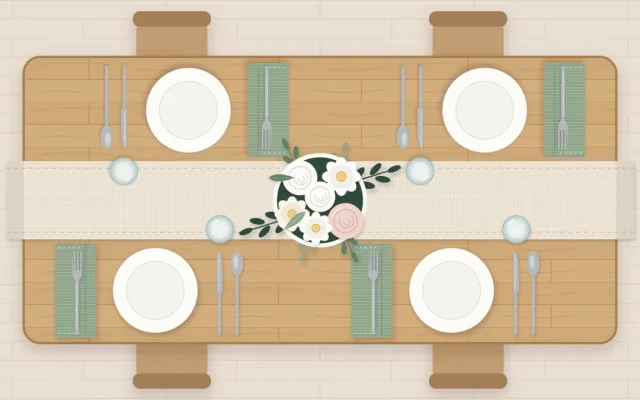
The same thinking carries over when people sit down. Use plain dishes in a single color, one glass per person and only the flatware the meal needs. Skip chargers, napkin rings and place cards unless one of them is your single chosen detail.
Let the tabletop show between settings instead of covering it, and keep the spacing between places exact, because uneven gaps are as noticeable as a crooked centerpiece. A napkin folded into a simple rectangle beside or on the plate is all the softness each place requires. The focal object can stay if it is low; if it is a tall branch, move it to the end of the table or off it for the meal.
This approach suits compact tables especially well, since there is no room for excess in the first place. For bistro and breakfast tables, see the ideas for decorating a small table.
If it still looks bare
When the result feels unfinished, the cause is usually one of these, and none of them calls for more decoration.
- The object is too small for the table. Swap it for something with more volume or height, such as a larger bowl or a taller branch in a heavy, steady vase.
- The object is too ordinary. A plain glass with a few stems disappears. Choose a piece whose outline you would notice across the room.
- The placement is vague. Move it to the true center or to a clear offset.
- The surface is not clean. Dust, rings and crumbs show on an open table. A wipe is part of the styling.
- The surroundings are busy. A calm table beside a crowded sideboard looks neglected by comparison. Clear the nearest surface too.
Frequently asked questions
How do I keep a minimal table from looking bare?
Make the single object large and distinctive enough for the table, place it at the exact center or at a clear offset, and keep the surface spotless. Adding one warm material, such as linen or wood, also helps. Bare usually means vague placement or an object that is too small.
How many objects can a minimal table have?
One is the classic answer, and a tight group of two or three that reads as a single shape also works. What matters is that there is only one place for the eye to land. Separate objects spread along the table stop looking minimal quickly.
What kind of centerpiece suits a minimalist table?
Something with a strong outline and a quiet color: a matte ceramic vase with one sculptural branch, a wide wooden bowl left empty, or a single low vessel. Choose shape and material over quantity, and avoid arrangements that need many small parts to look complete.