Simple Centerpiece Ideas You Can Build From What You Already Have
Ten quick centerpieces made from bowls, pitchers, jars and trays you already own, grouped by shape, with what you need for each and the reason it works.

The middle of the table does not need a trip to a flower shop. Most homes already hold everything a good centerpiece requires: a bowl, a pitcher, a few small jars, a tray. What makes these things look intended is how you group them, not what they are.
Here are ten simple centerpiece ideas, sorted by the shape they make on the table: one object, a group of three, a line, and a gathering on a tray. Each takes a few minutes, and each comes with the reason it works so you can adapt it to what is in your cupboards.
Four habits that make any centerpiece work
- Low or slim. Keep it low enough to see over from a chair, or tall and narrow enough to see past. Wide and tall at once blocks the person opposite.
- Leave room for dishes. Set the centerpiece, then check that serving dishes still fit beside it.
- Odd numbers and mixed heights. Three or five items at different heights look relaxed. Two or four at the same height look like a shop display.
- Contain small things. A tray, board or runner under several small pieces turns them into one object.
One object
The quickest centerpiece is a single generous thing. The trick is size: it should look slightly too big when you carry it to the table.
1. A wide bowl of one kind of fruit
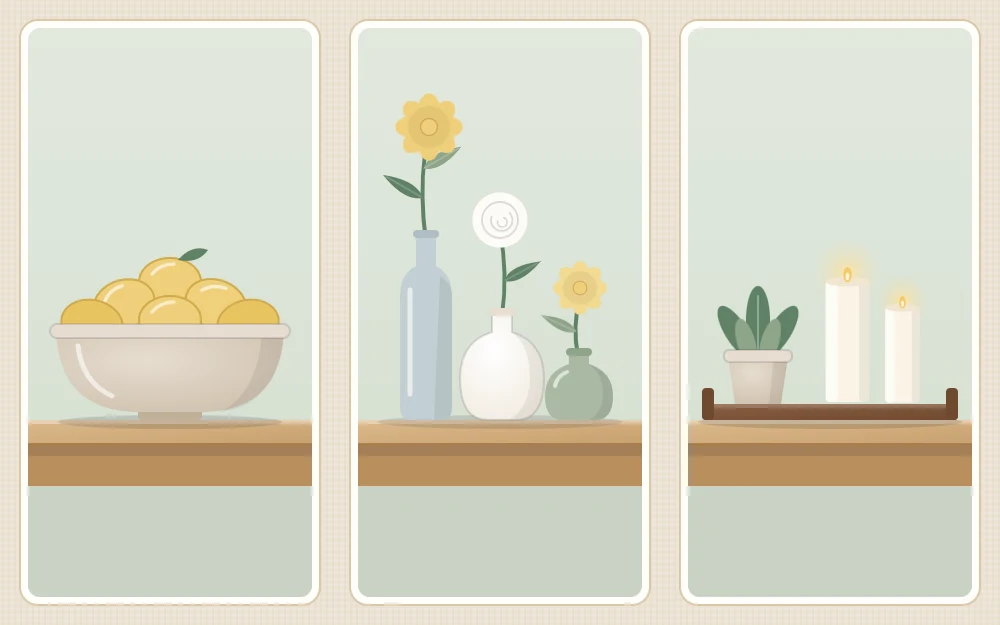
You need: a broad, shallow bowl and enough whole lemons, green apples or clementines to fill it. Why it works: one repeated shape in one color reads as a block of color, not as groceries. Mixing fruits loses the effect. There is more on choosing and filling the container in the guide to a decorative bowl centerpiece.
2. A pitcher of branches
You need: a heavy pitcher or jug and three to five bare or leafy branches. Why it works: branches give height with very little bulk, so people can see through them. Use a container that sits level and does not rock, trim any branch that leans far to one side, and nudge the table to test it before guests arrive.
3. One potted plant in a nicer pot
You need: a small houseplant and a ceramic pot or basket to slip its plastic pot into, with a saucer underneath. Why it works: it is alive, it lasts for weeks and it needs no arranging. If pets or small children share the room, check that particular plant before bringing it to the table.
A group of three
Three is the smallest number that makes a group, and three related objects at different heights nearly always look right.
4. Three bud vases, one stem each
You need: three small vases or bottles of different heights and three stems. Why it works: single stems show their shape, and the gaps between the vases keep the view across the table open. Stand them in a loose triangle, not a row. For a fuller arrangement, follow the steps for a flower centerpiece in a single vase.
5. Three flameless pillar candles on a plate
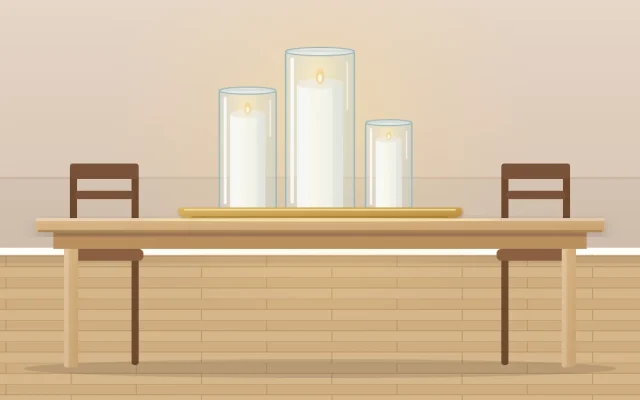
You need: three flameless LED pillar candles in different heights and a flat plate or tray. Why it works: a cluster of warm light pulls the eye to the middle after dark, and the plate ties the three together. Battery or rechargeable candles can sit on a fabric runner or beside flowers and can be left glowing while everyone moves to another room.
6. Three matching glasses of greenery
You need: three plain drinking glasses and a few cut stems of one leafy plant, such as herbs from a pot or clippings from the yard. Why it works: the containers match, so the green is all you notice. Vary the stem lengths to vary the height. A longer, fuller version is covered in the guide to a greenery centerpiece.
A line
Long rectangular tables often look better with a row than with a single arrangement, because a row reaches the people sitting at the ends.
7. A row of small jars down a runner
You need: five or seven small jars or glasses, a runner, and one short stem or sprig for each. Why it works: the runner acts as a base that holds the row together, and repeating the same small thing gives a steady rhythm. Space the jars evenly and leave gaps wide enough for a serving dish.
8. A line of fruit and leaves
You need: whole pears, small apples or clementines, and a few large clean leaves. Why it works: it lies almost flat, so nothing blocks the view, and it can be pushed aside in a moment when the dishes arrive. Lay the leaves along the center first, then set the fruit on top in a loose, slightly uneven line.
A gathering on a tray
A tray is a frame. Anything placed inside it looks arranged, and the whole thing lifts off in one move when the table is needed for something else.
9. The mixed tray
You need: a round or rectangular tray, one tall item (a bud vase), one medium item (a small plant or a flameless candle) and one low item (a small bowl). Why it works: tall, medium and low together create a small landscape. Leave some of the tray showing; if it is packed to the rim it looks like storage.
10. A board of small pots
You need: a wooden board and three small potted herbs or succulents in matching pots. Why it works: the board works like a tray with a warmer, more casual feel, and matching pots keep it tidy. Put a saucer under each pot to catch any water.
Good to know
Decorative bowls, trays and painted or metallic pieces are for display unless the maker states they are made for serving food. Keep fruit whole and in its peel, or set a plain plate or liner inside the bowl first.
Choosing among them
Let the table decide. A round or square table suits one object or a tight group of three. A long table suits a line, or a tray in the middle with a single bud vase toward each end.
Whatever you choose, make it the one thing on the table that draws attention. If the napkins, the runner and the centerpiece all compete, none of them wins; the guide to creating a focal point shows how to quiet everything else down.
Frequently asked questions
What can I use as a centerpiece instead of flowers?
Plenty of everyday things work: a wide bowl of whole lemons or apples, a pitcher of branches, a small potted plant, a group of flameless pillar candles or a tray holding a few objects in different heights. Choose one idea and make it generous, since a single clear shape looks more finished than several small unrelated items.
How tall should a table centerpiece be?
A useful rule of thumb is to keep it low enough to see over while seated, or tall and slim enough to see past. Sit in a chair and look at the seat opposite. If you have to lean to one side, lower the arrangement, thin it out or move it toward one end of the table.
How do I keep a centerpiece from looking cluttered?
Put the pieces on a tray, board or runner so they share one base, and limit the group to three or five items. Keep colors to two or three, vary the heights and leave some empty surface around the arrangement. If it still looks busy, take away the smallest object first.