Decorative Bowl Centerpiece Ideas for a Table You Use Every Day
How to choose a bowl that suits your table, what to fill it with in each season, and three ways to set it down so it lifts away in one move when you need the space.
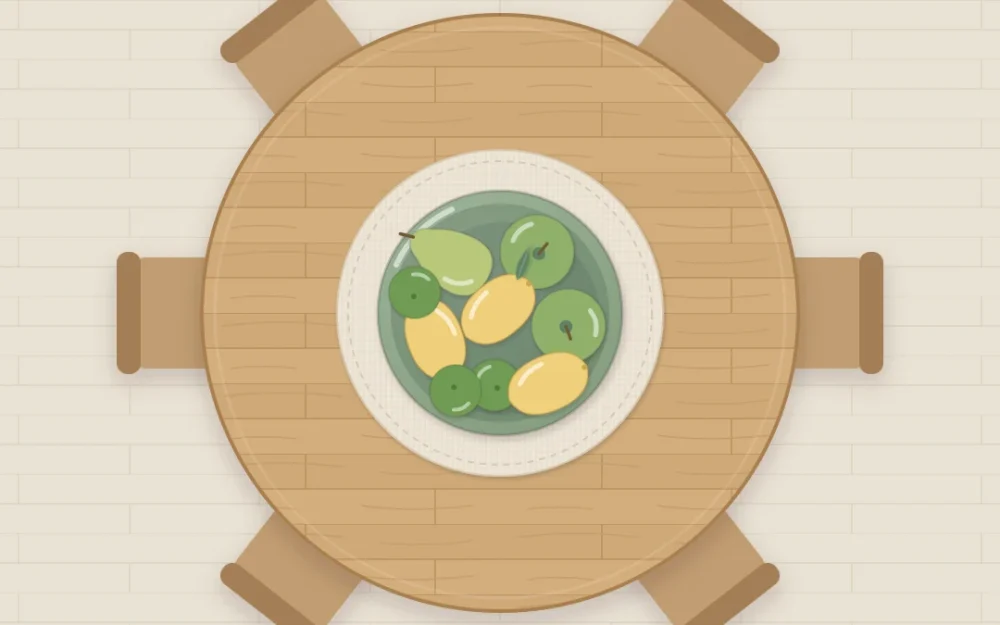
A table that gets used for breakfast, homework, laptops and dinner needs a centerpiece that can leave in one move. That is the whole case for a decorative bowl centerpiece: one object, one lift, and the table is clear. Put it back and the room looks finished again.
A bowl also forgives neglect. Nothing in it needs water, nothing wilts, and it looks deliberate whether it is full, half full or empty. What makes the difference is choosing the right bowl for your table and being a little strict about what goes inside.
Get the size and shape right first
A bowl that is too small looks like something left behind. One that is too large crowds the plates. As a starting point, look for a bowl roughly a third as wide as the table. On a table about 36 in (90 cm) across, that points to a bowl around 12 in (30 cm) wide. Treat it as a loose guide and adjust by eye.
Shape follows the table:
- Round or square table: a round bowl, placed in the middle.
- Rectangular table: an oval or long, boat-shaped bowl that runs with the table’s length, or a round bowl with one companion object beside it.
- Small table for two: a shallow dish no wider than a dinner plate, so there is still room to eat without moving it.
Depth matters as much as width. A shallow, open bowl shows off what is inside and stays below eye level. A deep bowl hides its contents from anyone seated and needs far more to fill it. A footed bowl adds height and presence; check that it sits level and does not rock when the table is bumped.
Choose material and color against the tabletop
The bowl should stand out from the surface it sits on. The quickest test is contrast, in either tone or texture:
- On a dark wood table, a pale ceramic, cream stoneware or light wooden bowl.
- On a pale or white table, a dark glazed bowl, deep green or charcoal ceramic, or warm brass.
- On a glossy table, something matte: unglazed clay, carved wood, woven fiber.
- On a rustic, matte table, something with a little shine: glazed ceramic, glass or metal.
If the bowl and the table are the same material and a similar color, put a mat or tray between them so the edge of the bowl is visible. Pick up one color that already exists in the room, such as the chair seats or a rug, and the bowl will look as if it belongs there.
What to put in it, season by season
One kind of filler, in quantity, looks calmer than a mixture. Fill the bowl to about two-thirds, or pile it slightly above the rim for a fuller look.
| Season | Filler | Why it works |
|---|---|---|
| Spring | Whole lemons or limes; pale decorative spheres | Fresh, clear color against any tabletop |
| Summer | Shells, smooth pebbles or whole peaches and plums | Light, relaxed shapes that suit bright rooms |
| Fall | Small gourds, whole pears, pine cones | Warm tones and rough texture |
| Winter | Pine cones, moss balls, matte ornaments, whole oranges | Deep color when the room is darker |
| Any time | Woven or wooden spheres, or nothing | Stays neutral between seasons |
The autumn row is the easiest place to start, and it grows naturally into a full fall table when you add a runner and napkins in the same tones. If young children use the table, skip small loose fillers such as pebbles and tiny ornaments and choose a few large pieces instead.
The empty bowl counts too
A bowl with a strong shape, an interesting glaze or a carved surface does not need filling. Left empty, it reads as sculpture, and it is the lowest-effort centerpiece there is. This works best when the bowl contrasts clearly with the table and nothing else is standing nearby to compete with it.
An empty bowl on a busy table does attract keys, mail and loose change. If that is likely in your house, fill it on purpose, so there is no room for clutter.
Before you put fruit in it
Good to know
A bowl sold as decorative may not be intended for food. Unless the maker states that it is made for serving food, treat it as display only: keep fruit whole and in its peel, or set a liner or a plain plate inside and rest the fruit on that.
This applies most to painted, metallic, antique and handmade pieces, where the finish is hard to judge by looking. If the bowl came without information and you cannot find the maker’s description, assume it is for display. Fruit that people will eat can live in a bowl you know was made for the kitchen.
Three ways to set the bowl on the table
On a runner
A runner gives the bowl a base and ties it to the length of the table. Keep the bowl centered on the runner and let the fabric show on both sides.
On a tray or mat
A round mat or a low tray slightly wider than the bowl frames it and protects the tabletop from scratches. It also makes the lift-away even easier: carry the tray and everything goes with it.
With one companion
One object beside the bowl is enough: a small vase with a single stem, a short stack of two books, a little potted plant. Vary the heights, set the two close together so they read as a pair, and stop there. Three or more objects and the bowl is no longer the centerpiece. For other low-effort combinations, see these simple centerpieces.
Keeping it fresh without fuss
A permanent centerpiece goes stale when nobody looks at it anymore. Three small habits prevent that:
- Check whole fruit every few days and replace anything soft or marked.
- Dust the bowl and dry fillers when you wipe the table.
- Change the filler when the season changes, and store the old one in a labeled bag.
That is the appeal of a bowl in daily life: a two-minute swap changes the look of the room. It sits well with the rest of an everyday table, where everything has to earn its place and move out of the way at mealtimes.
Frequently asked questions
What can I put in a decorative bowl besides fruit?
Dry fillers last longest: woven or wooden spheres, pine cones, shells, smooth pebbles, moss balls or matte ornaments. Choose one kind and use plenty of it for a calm look. A bowl with a strong shape or glaze can also be left empty and treated as a sculptural piece.
How big should a centerpiece bowl be?
A loose starting point is a bowl about a third as wide as the table, so a table roughly 36 inches (90 cm) across suits a bowl around 12 inches (30 cm) wide. Go smaller on a table for two, and choose a shallow shape so it stays below eye level.
Can I keep fruit for eating in a decorative bowl?
Only if the maker states the bowl is made for serving food. Many decorative bowls are intended for display. Otherwise keep fruit whole and in its peel, or put a liner or a plain plate inside the bowl and rest the fruit on that instead of on the bowl's surface.