Everyday Table Decor Ideas That Survive Daily Life
Eight ideas for a dining table that also handles homework, mail and laptops: a lift-off tray, a rule of three objects, a five-minute reset and one seasonal swap.
A dining table that only hosts dinner is easy to decorate. Most tables have a harder life: breakfast, homework, a laptop, the day’s mail, a jigsaw puzzle that stays out for a week. Good everyday table decor has to look pleasant between meals and get out of the way the moment the table is needed.
That changes what counts as a good idea. A pretty arrangement that takes five trips to clear will be shoved to one end by Wednesday. The eight ideas here are chosen for the opposite quality: each one holds up when real life happens around it.
What a working table asks of its decor
Before choosing any object, test it against three questions. If the answer to all three is yes, it will last on a busy table.
- Is it stable? A wide base and a low center of gravity matter more than looks when elbows, backpacks and a wobbly table leg are involved.
- Is it wipeable? Glazed ceramic, glass, sealed wood and metal shrug off crumbs and spills. Anything that stains or sheds will annoy you.
- Is it not precious? If you would be upset to see it chipped, it belongs on a shelf, not where people do homework.
Eight ideas that hold up to daily use
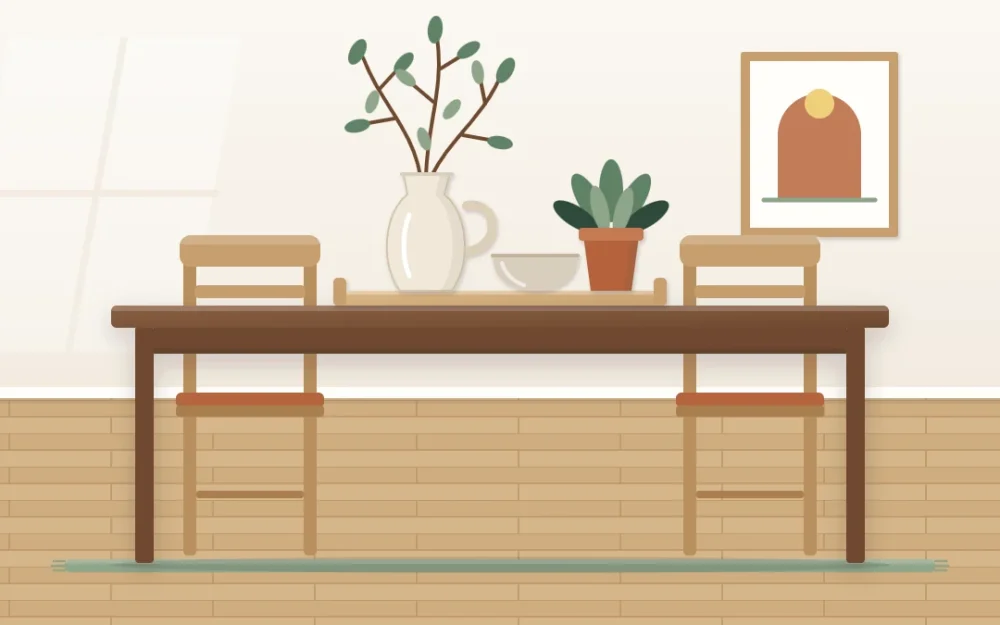
- Put the centerpiece on a tray. A tray turns several objects into one. When the table is needed, the whole arrangement lifts off in a single move and lands on the sideboard or counter. Choose a tray with a raised lip so nothing slides off in transit.
- Use a runner, or nothing. A runner covers only the middle of the table, so plates and notebooks still sit on a hard, wipeable surface. A bare table is just as valid; a nice wood or stone top is decoration by itself.
- Add one living thing. A small potted plant asks for water once in a while and otherwise looks after itself. It also brings the one thing objects cannot: change from week to week.
- Keep a bowl of whole fruit. Lemons, apples or clementines in a bowl give you color with a purpose, and the display refreshes itself as the fruit is eaten and replaced. For shapes and sizes that suit a table, see the guide to a decorative bowl centerpiece.
- Stand branches in a jug. Bare or leafy branches last far longer than cut flowers and need no arranging. A heavy ceramic jug with a narrow neck keeps them upright and is hard to tip.
- Choose a low profile. Anything shorter than about 10 in (25 cm) lets people see each other and the screen or book across the table. Tall pieces get moved, and moved pieces rarely come back.
- Give stray items a container. One small lidded box or basket on the tray swallows pens, coasters and the remote. The clutter still exists; it simply has an address.
- Pick flameless light. A rechargeable or battery LED candle adds a glow at dinner and can sit beside paper, schoolwork and sleeves without a second thought about a flame.
Good to know
Unless the maker states that a decorative bowl or tray is made for serving food, use it for display only: keep fruit in its peel or set a plain plate inside as a liner. If pets or young children can reach the table, check the specific plant or branch before you bring it home.
The rule of three objects
For a table in constant use, three objects is a sensible ceiling, and one or two is often better. A classic trio is something tall-ish, something low and something living: a jug of branches, a small bowl and a plant, all sharing a tray. Vary the heights and keep the materials related, such as two ceramics and one wood, so the group reads as a set.
If you like the look of even less, the approach in minimal table styling shows how a single object can carry the whole table. And if your table is too small for a tray at all, the ideas for decorating a small table scale everything down.
What to keep off the table
Some things look lovely for a day and then become chores. Leave these for occasions:
- A full tablecloth, which needs washing after one spill and bunches under a laptop.
- Loose scatter such as pebbles, beads or petals, which migrate into everything.
- Tall, narrow vases that tip when the table is bumped.
- Collections of small objects that each need lifting to wipe underneath.
- Anything fragile or sentimental.
Mail, keys and phone cables are not decor either, but they will land on the table unless they have somewhere else to go. A basket near the door does more for your table than any centerpiece.
A five-minute reset after dinner
Everyday decor only works if the table returns to its resting state once a day. Tie the reset to clearing the dishes so it becomes a habit.
- Clear everything that is not decor, including the things that drifted in during the day.
- Wipe the whole surface, lifting the tray instead of wiping around it.
- Straighten the runner and put the tray back in the same spot, centered or deliberately off to one end.
- Remove a dropped leaf or a tired piece of fruit and check the plant’s soil with a fingertip.
- Push the chairs in. A table with tucked chairs looks finished even with nothing on it.
Change one thing per season
You do not need to redecorate to keep the table from going stale. Keep the tray and the container, and swap a single element every few months: flowering branches in spring, a bowl of lemons in summer, small gourds or pears in fall, evergreen cuttings in winter. One change is noticeable precisely because everything else stayed put.
On weeknights when you want dinner to feel a little more considered, the same base carries over; the guide to casual table decor picks up from here with placemats, napkins and everyday dishes.
Frequently asked questions
What should I put on my dining table when it is not in use?
Keep it to one grouping that is easy to move: a tray holding a small plant, a jug of branches or a bowl of whole fruit. Up to three objects is plenty. Everything else, from mail to keys, is better given a home somewhere off the table.
Is a table runner practical for everyday use?
It can be, because a runner covers only the center and leaves the places where people eat and work bare and easy to wipe. Choose a washable fabric in a mid tone that hides the odd mark. If it keeps slipping or bunching, a bare table is a perfectly good choice.
How do I stop the dining table from collecting clutter?
Give the clutter another landing spot, such as a basket near the door for mail and keys, and reset the table once a day after dinner. A small lidded box on the centerpiece tray can hold the few items that truly belong at the table, like coasters and pens.