Casual Table Decor for Relaxed Weeknight Meals
How to set a relaxed weeknight table in about ten minutes: bare wood or placemats, mixed everyday dishes, loose napkins, a low jug of stems and the details that keep casual from looking messy.
A weeknight table does not need a pressed cloth to feel cared for. Casual table decor is a style in its own right: bare wood, everyday dishes, a soft napkin and one small thing in the middle that says someone thought about this meal. It takes about ten minutes and nothing has to be ironed.
The trick is that casual is still a decision. A relaxed table and a messy one can hold exactly the same objects; what separates them is a few quiet choices about alignment, color and where the eye lands. The sections below take the table layer by layer, then put it together as a short routine.
Start with the surface
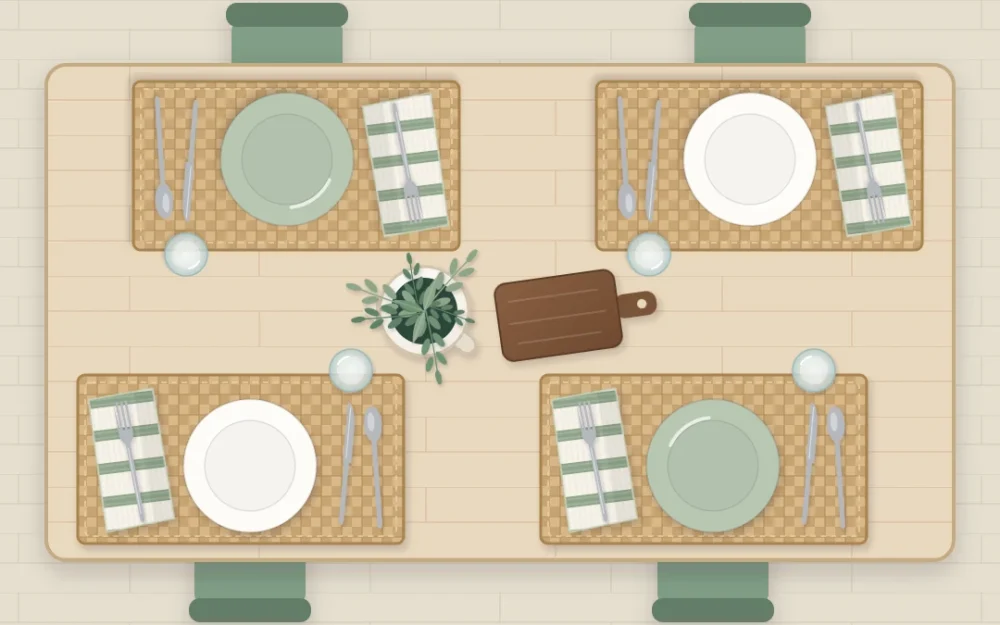
Leave the tablecloth in the drawer. A bare table is the natural base for a casual meal, and the grain of the wood or the plain color of the top already gives you texture. If the surface is easily marked or you want each place to feel defined, add placemats: woven grass, cotton, cork or felt all suit the mood, and they shake out or wipe clean afterward.
Line the mats up with the table edge, about 1 in (2.5 cm) back from it. That single act of straightening is what lets everything else stay loose.
Mix dishes on purpose
Everyday dishes are the right dishes. You do not need a matching set, and a table of slightly different plates has more warmth than a perfect one. The condition is that one thing stays constant, so the mix looks chosen:
- Constant color, varied shape: all white or all cream plates in whatever sizes and rims you own.
- Constant shape, varied color: the same round coupe plate in ivory, sage and soft blue.
- Constant material: all stoneware with a matte glaze, even when the makers and tones differ.
Glasses follow the same rule. Short tumblers in one height look calm together even when no two are identical. Leave the stemware for another night.
Keep napkins and flatware loose
A casual napkin is folded once or twice and laid down, or simply gathered at the middle and dropped beside the plate. Cotton and linen with a little rumple suit this table better than a crisp pressed square. For a family meal, a small basket of rolled napkins that everyone helps themselves from is even easier; these simple ways to present napkins include several that take seconds.
Flatware can go two ways. Lay a fork and knife together on the napkin or beside the plate, parallel and close, or stand everything in a sturdy jar or mug in the middle of the table and let people take what they need. The jar is especially good for meals where nobody is sure whether they want a spoon.
Put one low thing in the middle
A casual table still benefits from a focal object, just a humble one. A short jug or pitcher holding a handful of stems is the classic: garden flowers, leafy cuttings, or a bunch of fresh herbs such as mint, rosemary or parsley standing in water for their green alone. Keep it under roughly 8 in (20 cm) tall so it never blocks a face.
The serving pieces are part of the decoration too. A wooden board, a big ceramic bowl and a pitcher of water set down the center have shape and color of their own, so leave them space instead of crowding the middle with extra objects. One jug plus the dishes that carry the meal is a complete centerpiece.
Tip
For a little evening glow, add one or two flameless LED candles. With napkins, stems and sleeves all moving around a small table, a battery or rechargeable light is the easy choice.
Texture over polish
Formal tables shine: polished silver, glossy china, starched cloth. Casual tables are matte and tactile. Aim for three or four textures you can name, such as raw wood, woven fiber, washed linen and unglazed or matte ceramic. They give the table depth without any added ornament.
Hold the color palette to two or three related tones and let the texture do the talking. Ivory, sage and natural wood is one easy combination; oatmeal, rust and gray is another. In warm months, the same base brightens with a striped napkin or a jug of garden flowers, and the guide to summer table decor takes that further.
Relaxed or messy: how to tell
If the table looks untidy instead of easygoing, compare it with this list. The fix is usually one row, not a full reset.
| Element | Looks relaxed | Looks messy |
|---|---|---|
| Placemats and plates | Squared to the table edge, evenly spaced | At random angles and distances |
| Color | Two or three tones repeated | Every item a different color |
| Dishes | Mixed, with one constant | Mixed, with nothing in common |
| Napkins | All folded or all gathered | Some folded, some crumpled, some missing |
| Center of the table | One focal object with space around it | Several small things competing |
| Everything else | Mail, bottles and packaging cleared away | Left where it landed |
Notice that none of the relaxed column asks for better objects. It asks for repetition and a straight line or two.
A ten-minute weeknight routine
- Clear and wipe. Remove everything that is not part of the meal and wipe the surface.
- Lay the mats. One per person, aligned with the table edge.
- Set plates and glasses. Plate in the center of each mat, glass above and to the right as a common starting point.
- Add napkins and flatware. Pick one method, on the plate, beside it or in a shared basket and jar, and use it for every place.
- Place the jug. Fill it with whatever stems you have and set it in the middle, or slightly off-center if serving pieces need the space.
- Step back once. Straighten anything crooked, take away one item that is not earning its spot, and dim the overhead light if you can.
Between meals, the jug can stay where it is. For keeping the table presentable the rest of the day, see these everyday table decor ideas.
Frequently asked questions
Can I mix plates that do not match?
Yes, as long as they share one thing. Keep the color the same and let shapes vary, or keep the shape and vary the color. A common material, such as matte stoneware, also ties a mix together. With nothing in common, the same plates tend to look accidental.
Do I need a tablecloth for a casual dinner?
No. A bare table or simple placemats suit a casual meal better than a full cloth and are quicker to clean up. Placemats also give each person a defined spot, which helps the table look ordered even when the dishes and napkins are kept loose.
What is a good centerpiece for a weeknight table?
Something low and quick: a short jug with a handful of garden stems, leafy cuttings or a bunch of green herbs in water. Keep it low enough to see over and leave room for serving pieces, which act as part of the centerpiece once they are on the table.