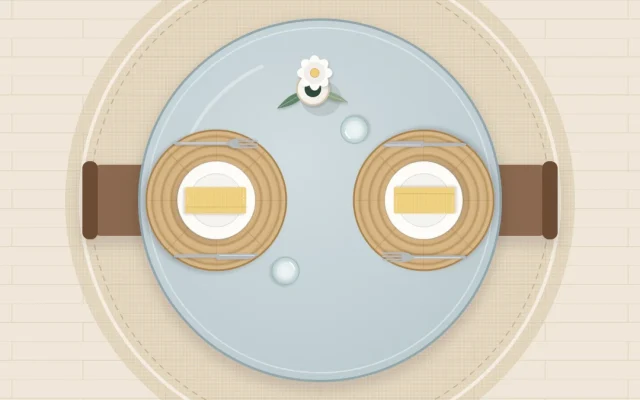
Dinner Table Decor Ideas for a Sit-Down Meal at Home
Plan a sit-down dinner table from the meal backwards: let the serving style set the center space, then add a base layer, a low centerpiece, complete places, soft light and one personal touch.

The easiest way to plan dinner table decor is to start from the meal and work backwards. Before choosing flowers or colors, picture how the dishes will reach the table. That one answer tells you how much of the center is free for decoration, and it prevents the familiar scramble of moving a centerpiece to make room for a platter.
From there a sit-down table needs only five things: a base layer, something low in the middle, a complete setting at each place, soft light and one personal touch. None of it has to be stiff. The aim is a table that looks ready for people, not for display.
Let the serving style decide the center
How the meal is brought out changes the shape of the decoration more than any style choice. Use this as a loose guide.
| How dinner is served | Center space left for decor | What fits |
|---|---|---|
| Plated away from the table | Nearly all of it | A full-length runner with a line of small arrangements |
| Shared dishes passed at the table | About a third | One compact centerpiece, with clear landing spots on either side |
| Shared dishes that stay on the table | Very little | Two small pieces at the ends, or bud vases between the dishes |
| Served from a sideboard | Most of it | A centerpiece or a row of small ones, kept low |
If shared dishes will sit on the table, lay out the empty platters and bowls first and decorate around them. The gaps you see are the real space you have.
Build a base layer
A cloth or runner is what separates a dinner table from an everyday one. A tablecloth softens sound and makes the whole surface feel dressed; a drop of roughly 8 to 10 in (20 to 25 cm) over each edge is a common starting point that clears laps comfortably. A runner down the center is lighter and lets a good tabletop show.
Keep the base quiet, in a neutral or one soft color, and bring the accent in through napkins and flowers. If you are unsure which colors to pair, the guide to choosing a table color palette shows how to settle on a main tone, a supporting tone and one accent.
Keep the centerpiece low, or split it up
Dinner is conversation, so the middle of the table should never hide the person opposite. As a rule of thumb, keep arrangements below about 12 in (30 cm), roughly the height of a forearm resting upright on the table. A single low bowl of flowers works on a round or short table; a simple flower centerpiece in a vase is quick to make the same afternoon.
On a rectangular table, a line of small pieces often serves better than one large one. Three small arrangements spaced down the runner give every seat something to look at, and each one is easy to lift away if a dish needs the spot. Choose flowers with little or no scent for the table, so nothing competes with the meal.
Set complete places with room to move
Set each place with the basic place setting layout, including every glass and piece of flatware the meal will need, so nobody has to get up once dinner starts. A napkin in the accent color on each plate ties the places to the centerpiece.
Comfort is part of the decor. Allow roughly 24 in (60 cm) of table edge per person where you can, and check that chair legs and table legs do not trap anyone. A table with one fewer place and space to breathe looks more generous than a crowded one, however pretty the crowding is.
Soften the light
Lighting changes the mood of a dinner table more than any object on it. Turn overhead lights down or off, switch on a lamp elsewhere in the room, and add a low glow at table level.
Flameless LED candles are the simplest way to get that glow. They can sit between flower arrangements, next to napkins and on a fabric runner, and they stay on through the whole evening without attention. Warm-white ones with a soft flicker look convincing in dim light.
If you prefer real candles, treat them as a separate element with their own space. The guide to candle centerpieces covers the arrangements in detail; the essentials are below.
Candle safety
Put each real candle in a sturdy holder on a stable, heat-resistant surface, away from anything that can burn, including flowers, greenery, napkins, the runner and nearby curtains, and out of drafts. Keep candles out of reach of children and pets. Never leave a flame unattended, and put every candle out before you leave the room. The NFPA candle guidance has more detail.
Add one personal touch
One small gesture aimed at the guests keeps a carefully set table from feeling formal. Choose a single idea and repeat it at every seat:
- A handwritten name card above each plate.
- A sprig from the garden laid on each napkin.
- Flowers in a color that a guest of honor loves.
- A family serving piece or pitcher given pride of place.
One is enough. The touch works because it is noticed, and it is noticed because nothing else is competing with it.
Set ahead, then edit before guests sit
Lay the table earlier in the day, or the evening before, so the last hour is free. Cloth, plates, flatware, glasses, napkins and flameless candles can all go out in advance. Add fresh flowers last, and turn glasses upside down if they will sit for many hours.
Just before guests come to the table, do a final pass:
- Sit in one chair and look across. Lower or remove anything that blocks a face.
- Take away one decorative item. Tables are almost always improved by having slightly less on them.
- Check that tall pieces are steady and level and that nothing sits close to the table edge.
- Clear landing spots for the dishes that are about to arrive.
- Switch on the candles and dim the room lights.
Frequently asked questions
How tall should a dinner table centerpiece be?
Low enough that seated guests can see each other across it. A common rule of thumb is to stay under about 12 inches (30 cm). Sit in a chair and look across the table to check, since the right height depends on your chairs, your table and the arrangement itself.
Can I set the dinner table the night before?
Yes. The cloth or runner, plates, flatware, glasses, napkins and flameless candles can all be laid out ahead of time. Turn glasses upside down if they will sit for long, and add fresh flowers on the day so they look their best when guests arrive.
How do I decorate the table when shared dishes need the space?
Place the empty platters and bowls on the table first, then decorate the gaps. Small pieces work best: a pair of bud vases, or one compact arrangement at each end. Anything in the center should be easy to lift away with one hand when a dish arrives.