Place Setting Ideas: Small Touches for Each Seat
Seven small touches that make each seat feel prepared for the person sitting there, from a sprig on the napkin to a handwritten name, plus how to pick just one or two.

Once the plates, glasses and flatware are in their spots, the table works. What it may not do yet is tell each guest that this particular seat was made ready for them. That is the job of the small things you add at each place, and the best place setting ideas are nearly always small: a sprig, a name, a twist of twine, a second plate in a softer color.
Everything below sits at the seat instead of in the middle of the table. It assumes the layout itself is done; if you want to check that first, the basic place setting guide walks through where each piece commonly goes. From here on, it is all finishing touches.
Choose one or two touches, not five
A single place is a small area, roughly the width of a placemat. Stack a charger, two plates, a tied napkin, a sprig, a card, a favor and a bud vase into it and your guest has to dismantle a display before the meal can start. One touch reads as thoughtful. Two can work when one is flat, such as a card, and the other brings a little height or texture, such as a sprig. Past that, the place starts to look crowded.
A quick way to decide: ask whether the table needs color, a name or something natural, then pick the single idea that does that job best.
Seven small touches compared
| Touch | What it adds | Keep in mind |
|---|---|---|
| Sprig or small flower on the napkin | Something living and a line of green | Pick firm stems; soft ones droop quickly |
| Blank place card or tag | A name and a sense of welcome | One ink color, simple lettering |
| Ribbon or twine tie | Color and texture around the napkin | A knot that comes undone with one pull |
| Small favor | Something to take home | Small enough to sit above the plate |
| Layered plates in two tones | Color without any extra object | Keep both tones inside your palette |
| Charger or placemat | A frame that defines the place | Leave room between neighbors |
| Bud vase for each person | Flowers at every seat | Suits a long table; keep it low and steady |
Touches that sit on the napkin
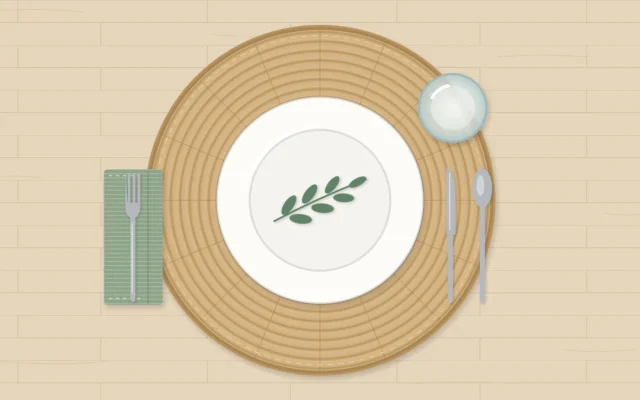
The napkin is the easiest spot to dress, because it gets picked up in the first minute and takes the decoration with it. Lay a single sprig across the fold: rosemary, olive, eucalyptus or a short length of ivy all hold their shape for an evening. One small flower head works the same way. Trim stems to about 4 in (10 cm) so nothing pokes past the plate rim.
A tie turns the napkin into a small bundle. Wrap kitchen twine twice and knot it, or use a narrow ribbon in your accent color with the ends cut on a slant. Slip the sprig under the tie and you have two touches that read as one. For more ways to fold, roll and place the napkin itself, see these napkin presentation ideas.
Names at each seat
A place card does more than assign chairs. Seeing your own name on the table is a quiet welcome, and it spares guests the moment of hovering and wondering where to sit. Plain cards are enough: a folded rectangle of cream card stock above the plate, or a paper tag threaded onto the napkin tie.
Keep the handwriting simple. First names only, one pen, one size. If your lettering is uneven, write in lowercase and leave generous space around the name; white space makes ordinary handwriting look intentional. Write a spare card or two in case of a smudge.
Tip
For a celebration, the card can carry the theme by itself: a tag in the party color or a tiny drawn star beside the name. A birthday table often needs nothing more at each seat than that.
Color from plates, mats and chargers
Layering two plates is the most practical touch on the list, because nothing has to be moved before eating. Put a smaller plate in a second tone on top of the dinner plate: blush on ivory, sage on white, charcoal on oatmeal. The rim of the lower plate shows as a ring of color, and the pairing does the decorating.
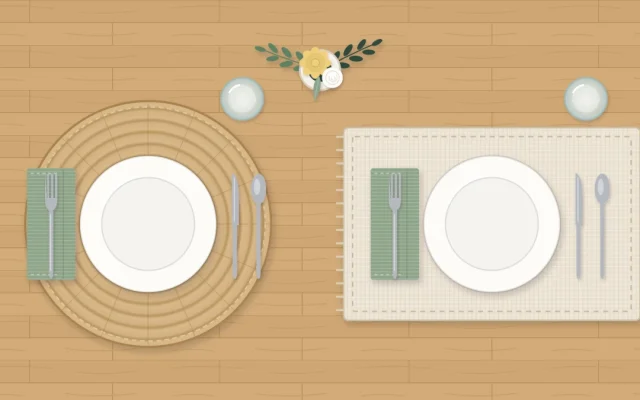
A charger or placemat works as a frame. It gives each place an edge, which helps on a bare wood table where settings can seem to float. Choose a mat that leaves a little of the table visible between neighbors, so each frame stays distinct.
Good to know
Many chargers and metallic or painted plates are made for display. Unless the maker states that a piece is made for serving food, treat it as a base only and keep a regular dinner plate on top.
A bud vase or a favor for each person
On a long table, a tiny bud vase at each place can replace a centerpiece altogether. One stem per vase is plenty. Set each vase above the plate and slightly to one side, where it will not be knocked by a reaching arm, and choose vases with a wide, steady base. On a small table, skip this one; the vases will compete with the glasses.
A favor follows the same logic: small, light and placed above the plate, never on it. A packet of seeds, a wrapped bar of soap or a miniature notebook tied with the same twine as the napkin all work. If a favor needs explaining, it is probably too complicated for the place setting.
Repeat the accent and keep the plate usable
Whatever you choose, do the same thing at every seat. Repetition is what makes a small touch look planned: eight identical sprigs form a rhythm down the table, while eight different ideas look like leftovers. Take the color of your ribbon, card or top plate from the accent already on the table, such as the flowers or the runner.
Then run the usability test. Sit down at one place and check that you can lift the napkin, reach the glass and start eating without relocating more than one item. Anything that would end up on the floor or in a guest’s lap should go.
Two cautions before guests arrive. Small loose pieces such as beads, tiny charms and scattered confetti are a poor choice when young children are at the table. And because paper tags, ribbon and twine burn easily, pair them with flameless LED candles only.
Frequently asked questions
How many decorative touches should one place setting have?
One is usually enough, and two is a comfortable upper limit. Pair something flat, like a name card, with something that has a little texture, like a sprig or a twine tie. If a guest would need to move several things before eating, take one away.
Where does a place card go?
A common spot is just above the plate, centered, where it can be read from behind the chair. You can also rest a flat card on the napkin or tie a tag to it. Whichever you choose, use the same position at every seat so guests can find their names quickly.
Do I need chargers to make a place setting look finished?
No. A charger is only one way to frame a place. A placemat does the same job, and so does a second plate in a contrasting tone layered on the dinner plate. On a small table, skipping the frame altogether often looks cleaner and leaves more elbow room.