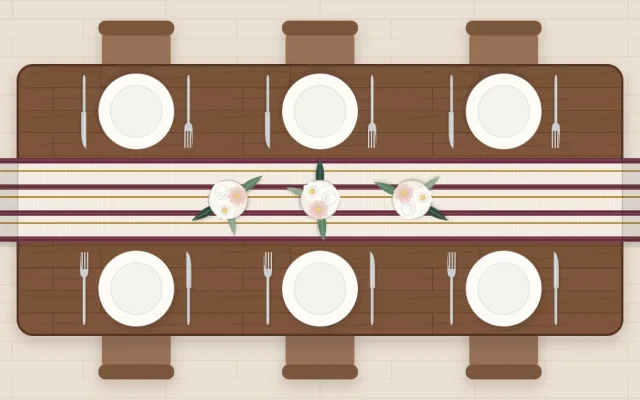
Layering Textures on a Table: A Simple Formula for a Richer Look
A neutral table looks flat when every surface feels the same. Use a formula of three to five contrasting textures, built from the surface up and each repeated twice, to add depth without more color or clutter.
A neutral table can have every piece in the right place and still look flat. Ivory plates on an ivory cloth with ivory napkins read as one pale sheet, and the usual instinct is to fix it with a bright color or a few more objects.
Layering textures is the quieter fix. When a rough surface sits beside a smooth one, the eye notices the difference even if both are the same shade. That contrast gives a calm palette depth without adding a single extra thing to dust or move.
Why a quiet table needs contrast you can feel
Color separates one object from another. Take most of the color away and something else has to do that work, or the plate disappears into the cloth. Texture does it through light: a matte surface absorbs light, a glazed one bounces it, and a woven one breaks it into small shadows.
So the aim is not “more texture”. It is contrast between neighbors. Each layer should differ from the one directly under it in at least one way.
The three pairs that do most of the work
Almost every good combination comes from one of three opposites. You do not need all three at every place, but a table with none of them will look flat however nice the pieces are.
| Pair | One side | Other side | Where to use it |
|---|---|---|---|
| Smooth with rough | Glazed plate, polished wood | Woven mat, slubby linen | Plate on placemat |
| Matte with shine | Stoneware, washed cotton | Glass, a little metal | Glassware and flatware |
| Soft with hard | Loose napkin, wool felt | Ceramic, stone, wood | Napkin on plate |
The formula: three to five textures, each used twice
Count the distinct textures on your table. Fewer than three and the table tends to look plain. More than five and it starts to look like a sample board. Three to five is a loose guide that suits most everyday and dinner tables.
A reliable set of five looks like this:
- Bare wood for the surface
- Washed linen for the runner or napkins
- Woven fiber such as seagrass or rattan for the mats
- Matte ceramic for the plates
- A little glass or metal for the sparkle
Then apply the second half of the formula: repeat each texture at least twice. A single woven mat under the centerpiece looks like an accident. The same weave under every plate, and again in a small basket in the middle, looks like a decision. Repetition is what turns a collection of nice surfaces into one table.
Tip
Squint at the table from the doorway. If you can still tell where each layer ends, the contrast is strong enough. If everything blurs into one tone, swap a single layer for its opposite.
Build it from the bottom up
Texture is easiest to judge when you add one layer at a time and look before adding the next.
- Start with the surface. A wood table with visible grain is already a texture, so leave some of it showing. A smooth painted or glass top counts as your “smooth”, which means the next layer should be rough.
- Add the runner or mats. This is the layer that contrasts with the surface. Linen with visible weave on polished wood, or a woven mat on a plain cloth. If you are unsure which to choose, the guide to using a table runner covers length and placement.
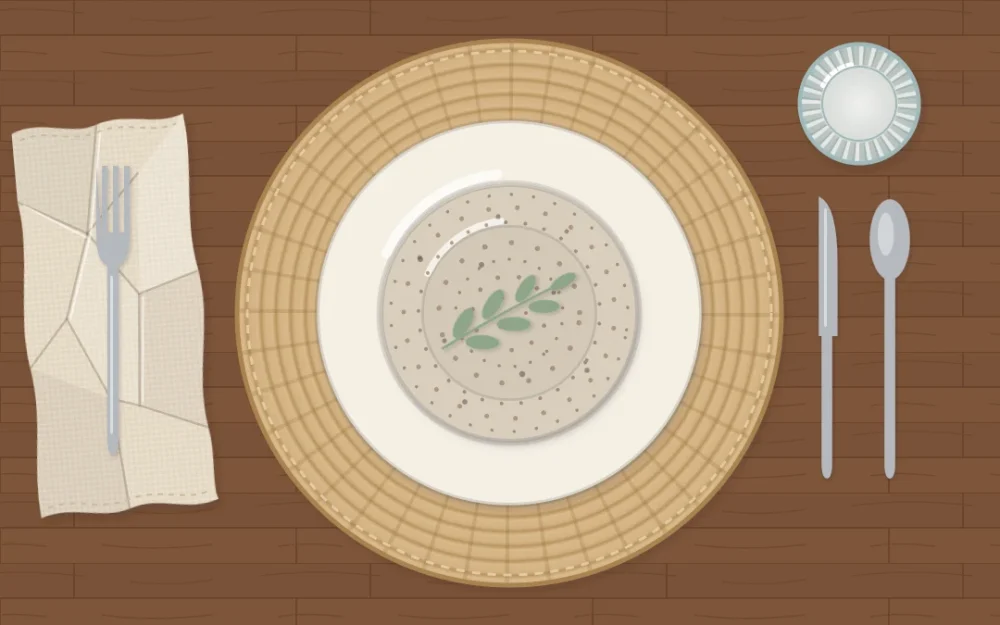
- Set the plates. A matte plate on a woven mat gives smooth on rough. Stacking a speckled or ribbed smaller plate on a plain larger one adds a second, finer texture without a new color.
- Place the napkin. This is the soft layer. Leave it loosely folded or gently crumpled rather than pressed flat, so it holds a few shadows.
- Finish with the centerpiece. Repeat one texture from below and introduce the shine: a ribbed glass vase, a small brass bowl, a handful of dried stems in a stoneware jug.
Stop when each layer differs from the one below it. Adding a sixth layer rarely improves what five already do.
Mind the scale of each texture
Textures have size, just as patterns do. A chunky rope mat is a large texture. Fine linen is a small one. Two large textures side by side compete, and two tiny ones merge at arm’s length.
Aim for one large, one medium and one fine. For example, a chunky woven mat (large), a ribbed tumbler (medium) and a linen napkin (fine). On a small table, shift everything down a size, because a heavy weave under every plate can crowd a compact surface.
Keep the shine small
Shine is the strongest of the textures, so it needs the lightest hand. Glassware and flatware already supply some. One more reflective piece in the center is usually enough: a glass vase, a metal tray, a mirrored coaster under a jar.
Good to know
Metallic, painted and rough-glazed decorative bowls and chargers are for display unless the maker states they are made for serving. Keep fruit in its peel, or set a plate on top of the charger.
Changing the formula with the seasons
The method stays the same all year. What changes is which side of each pair you lean toward.
- Spring and summer: lighter and smoother. Crisp cotton, clear glass, fine open weaves and more bare table showing.
- Fall: rougher and warmer. Heavier linen, wood boards, dried grasses and nubby stoneware. The fall table ideas build on exactly this shift.
- Winter: softer and a touch shinier. Wool or velvet in small amounts, with glass and metal picking up the low light.
Swap one or two layers at a time rather than the whole table. Changing only the napkins and the centerpiece vessel is enough to move a table from one season to the next.
When you do want color back
A textured neutral table makes a good base for a single accent. Because the surfaces already separate the layers, one color in the napkins or the flowers is enough, and it will look deliberate rather than lonely. The table color palette ideas show how to choose that accent so it sits comfortably with wood, linen and stoneware.
Frequently asked questions
How many textures should a table have?
Three to five distinct textures is a comfortable range for most tables. With fewer than three, a neutral table tends to look plain; with more than five it can look busy. Treat the range as a loose guide and count the bare table surface as one of your textures if it is showing.
Can I layer textures on a table with a tablecloth?
Yes. The cloth simply becomes your base layer instead of the wood. Choose the next layer to contrast with it: a woven mat or a rougher runner on a smooth cotton cloth, or smooth glazed plates and clear glass on a heavily textured linen cloth.
Does a textured table need to be all one color?
No, but texture matters most when the palette is quiet, because there is little color to separate one piece from the next. Shades of ivory, sand, gray and natural wood work well together. If you add an accent color, keep it to one element so the textures still show.