
What Every Beginner Needs to Know About Astro Photography
Astro photography beginner guide — here’s the quick version before we dive deep:
Quick-Start Astrophotography Checklist:
- Camera – Any DSLR or mirrorless with manual controls works fine
- Lens – Wide-angle (14-24mm) with a fast aperture (f/1.8-f/2.8)
- Tripod – Sturdy and stable for long exposures
- Location – Away from city lights (use a light pollution map)
- Timing – Shoot near the new moon for the darkest skies
- Settings – Manual mode, ISO 1600-6400, widest aperture, 15-25 second shutter
- Focus – Manual focus on a bright star using live view zoom
- Format – Always shoot RAW for editing flexibility
You’ve seen those jaw-dropping photos of the Milky Way arching over a mountain range. And you’ve wondered: how do people actually take those?
Here’s the truth: it’s more achievable than it looks. As defined by Wikipedia, this hobby involves capturing images of the night sky and celestial objects.
You don’t need a telescope. You don’t need thousands of dollars of gear. Many experienced astrophotographers started with nothing more than a basic DSLR, a kit lens, and a cheap tripod — and got results that completely blew them away.
The first time you capture the Milky Way with your own camera is genuinely thrilling. Stars your naked eye could barely see suddenly appear by the hundreds in a single 20-second shot. Your camera sees more than your eyes do in the dark — and that never really gets old.
The main challenges beginners face are all solvable:
- Too much blur? That’s a settings or stability issue.
- Too much noise? That’s ISO and exposure technique.
- Can’t find the stars? That’s a location and timing problem.
This guide walks you through every one of those challenges, step by step.

Essential Gear for Your Astro Photography Beginner Guide
When you’re starting out, the “gear fear” is real. You might think you need a NASA-grade telescope to see a nebula, but for most nightscape photography, a standard camera setup is your best friend. We recommend focusing on a system that allows full manual control.
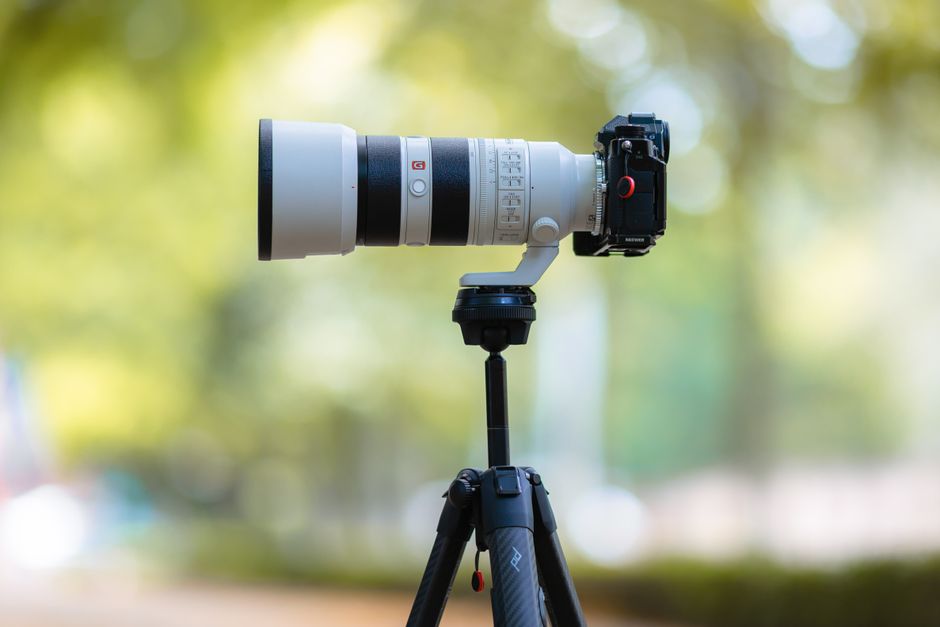
Whether you choose a DSLR or a mirrorless camera, the sensor size matters. A full-frame sensor is often the gold standard because it has larger pixels that can “drink in” more light with less noise. However, APS-C (crop sensor) cameras are incredibly capable and often more budget-friendly for those just beginning their journey.
Beyond the camera body, you’ll need a few non-negotiables:
- A Sturdy Tripod: This is the foundation of your shot. Even the slightest vibration from a breeze can ruin a 20-second exposure. Check out our guide on Affordable Tripods for Night Sky Photography to find one that won’t break the bank.
- Remote Shutter or Intervalometer: Pressing the shutter button with your finger causes “camera shake.” A remote allows you to trigger the shot hands-free. If you don’t have one, the built-in 2-second timer on your camera is a great free alternative.
- Red Headlamp: White light ruins your night vision (and the vision of anyone shooting near you). A red light allows you to see your dials without blinding yourself.
- Extra Batteries: Long exposures in cold night air drain batteries faster than a morning commute. Always pack spares.
For those looking to use what they already have in their pocket, we’ve also curated Gear Essentials for Mobile Night Photography to help you maximize your phone’s potential.
Choosing the Best Lens for Stars
If the camera is the heart of the operation, the lens is the eye. For a successful astro photography beginner guide experience, you generally want a wide-angle lens.
Lenses with a focal length between 14mm and 24mm (on a full-frame) are ideal. Why? Because they allow you to capture a massive portion of the sky and the landscape in one frame. More importantly, wider lenses allow for longer shutter speeds before the stars start to “trail” due to the Earth’s rotation.
You also need a fast aperture. Look for a lens with an f-stop of f/2.8 or wider (like f/1.8 or f/1.4). This wide opening lets in the maximum amount of light. While zoom lenses are versatile, many beginners prefer prime lenses (fixed focal length) because they are often sharper and faster at a lower price point. If you’re shooting on a phone, check out these Optimal Lenses for Smartphone Milky Way Photos.
Crucial Accessories for Field Work
Once you’re out in the field, mother nature can be a bit of a diva. Dew prevention is a major hurdle; as the temperature drops, moisture can fog up your lens. A simple USB-powered lens heater can keep your glass clear all night.
If you find yourself falling in love with deep-space objects, a star tracker is your next logical step. This device sits between your tripod and camera, rotating at the same speed as the Earth to allow for exposures lasting minutes rather than seconds.
Whatever you do, ensure you have high-capacity memory cards and always shoot in RAW format. RAW files contain all the data captured by the sensor, giving you the “digital negative” needed for post-processing. To keep your gear running through the night, we recommend looking into Reliable Battery Packs for Long Astrophotography Sessions.
Planning Your Night Sky Session
Success in astrophotography happens long before you click the shutter. You need to find a place where the stars actually show up.
The biggest enemy is light pollution. Most of us live in “light domes” where city glow washes out all but the brightest stars. To find truly dark skies, we use the Bortle Scale, which ranks darkness from 1 (pristine) to 9 (inner-city). Aim for a Bortle 3 or lower for the best results. You can find these spots using tools like the Light Pollution Map or by visiting designated Dark Sky Parks.
For local inspiration, see The Best Locations for Capturing the Milky Way with Your Smartphone.
Weather is your second hurdle. You need clear skies, but you also need to consider atmospheric seeing—a measure of how stable the air is. High-altitude turbulence can make stars look like blurry blobs even if there are no clouds. Use our Planning Your Night Sky Photography Shoot: A Guide to master the logistics.
Understanding Moon Phases and Timing
The Moon is a giant natural light bulb. While beautiful, a full moon will drown out the Milky Way. The ideal time to shoot is during a New Moon, or the days immediately before and after it. This ensures the sky is as dark as possible, allowing the faint light of distant galaxies to reach your sensor.
Timing also depends on the Milky Way core (the Galactic Center). In the Northern Hemisphere, “Milky Way Season” typically runs from March to October. During these months, the brightest part of our galaxy is visible above the horizon. For more on when to head out, check these Timing Tips for Capturing Stars.
Essential Apps for Astro Photography Beginner Guide
We live in the golden age of apps, and they make planning a breeze.
- PhotoPills: The “Swiss Army Knife” for photographers. It tells you exactly where the Milky Way will be at any given time.
- Stellarium/SkySafari: These act as a planetarium in your pocket, helping you identify constellations and planets. You can also use the Stellarium Web version for desktop planning.
- Clear Outside: Provides detailed cloud cover forecasts specifically for astronomers.
You can find more specialized tools in our list of Top Apps for Mobile Astrophotography and the Best Apps to Track Stars and Planets on Your Mobile.
Mastering Camera Settings in This Astro Photography Beginner Guide
Put your camera in Manual Mode (M). In the dark, your camera’s “Auto” mode will panic and try to fire the flash or give you a black screen. You need to take the wheel.
Here is a quick reference table for your starting points:
| Target | Aperture | Shutter Speed | ISO |
|---|---|---|---|
| Milky Way | f/1.8 – f/2.8 | 15-25 Seconds | 3200 – 6400 |
| Moon | f/8 – f/11 | 1/125th Second | 100 – 400 |
| Star Trails | f/2.8 – f/4 | 30 Seconds (Multiple) | 800 – 1600 |
For a deeper dive into these numbers, read How to Night Sky Camera Settings the Right Way and The Ultimate Guide to Best Settings for Stars Photography.
Calculating Shutter Speed with the 500 Rule
Because the Earth is spinning, stars appear to move. If your shutter is open too long, those sharp points of light turn into little sausages (star trails). To prevent this, we use the 500 Rule.
The Formula: 500 / Focal Length = Max Shutter Speed. Example: If you are using a 20mm lens on a full-frame camera, 500 divided by 20 equals 25. You can shoot for up to 25 seconds before seeing blur.
If you’re using a crop sensor, remember to multiply your focal length by the crop factor (usually 1.5x or 1.6x) before dividing. For those who want more precision, the NPF Rule or the 300 Rule are stricter alternatives. Check out our Exposure Guide Photography for Beginners Who Hate Math for a simplified breakdown.
Achieving Sharp Focus in the Dark
Autofocus is useless in the dark. To get sharp stars, you must use Manual Focus.
- Turn on Live View on your LCD screen.
- Find the brightest star or a distant light.
- Use the 10x magnification tool on your screen to zoom in on that star.
- Slowly turn your focus ring until the star becomes the smallest, sharpest point possible.
- Pro Tip: Once focused, use a piece of gaffer tape to lock the ring so it doesn’t budge.
For more techniques, see Focusing on Stars: A Guide to Sharp Night Skies.
Composition and Post-Processing Basics
A photo of just stars is technically a science project. A photo of stars above a lighthouse is art.
Use Foreground Interest to give your photo scale and context. Use Leading Lines (like a road or a fence) to point toward the Milky Way. The Rule of Thirds still applies at night! You can also try Light Painting, where you use a dim flashlight to gently “brush” light onto a nearby tree or rock during the exposure.
Learn more about these creative choices in Night Sky Photography: A Beginner’s Guide.
Image Stacking for Noise Reduction
High ISO settings create “noise”—that grainy, speckled look. To fix this, pros use Image Stacking. This involves taking 10 to 20 identical shots of the same scene and using software (like Sequator or Starry Landscape Stacker) to average them out. This improves the signal-to-noise ratio, leaving you with a silky-smooth sky.
You’ll also hear about Calibration Frames:
- Darks: Shots taken with the lens cap on to map sensor heat/noise.
- Flats: Shots of an even light source to fix vignetting.
- Bias: Super-fast shots to map electronic read noise.
Even mobile users can benefit from this; see Stacking Smartphone Astrophotography Images for Clear Views.
Editing for Natural Colors
When you first open your RAW file, it might look flat or overly yellow/blue. Start by adjusting your White Balance. A setting between 3800K and 4200K usually results in a natural, deep blue sky.
Use the Histogram to ensure you aren’t “clipping” your data (losing detail in the shadows or highlights). The goal is to “stretch” the data—bringing out the faint details of the nebula without making the sky look fake. For a step-by-step on the digital side, visit Astrophotography Post-Processing for Beginners and Color Correction Techniques for Night Sky Photos on Your Smartphone.
Frequently Asked Questions about Astrophotography
Can I start with a smartphone?
Absolutely! Modern high-end smartphones have impressive Night Modes and sensors. While they can’t quite match a full-frame DSLR for deep-sky detail, they are incredible for learning composition and capturing the Milky Way core. Check out Mastering Mobile Astrophotography: A Beginner’s Guide and Unlocking the Galaxy: Photographing Stars with a Smartphone to get started.
How do I avoid blurry stars?
Blur usually comes from two places: Earth’s rotation (shutter too long) or physical movement. Ensure your tripod is stable and on solid ground. Use a shutter delay or a 2-second timer so the vibration from your hand touching the camera has time to die down before the shot begins. For mobile users, Stop Shaking and Start Stargazing with These Phone Adapters can be a lifesaver.
What are common beginner mistakes?
The three biggest “oops” moments are:
- Shooting during a Full Moon: It’s just too bright!
- Shooting in JPEG: You lose 90% of your editing power.
- Using Autofocus: It will almost always miss the mark in the dark.
Avoid these pitfalls by reading Common Beginner’s Mistakes in Astrophotography and How to Avoid Them.
Conclusion
At Pratos Delícia, we believe that the night sky is the world’s greatest free gallery. All it takes to enjoy it is a bit of persistence and a willingness to stand in a dark field at 2 AM. Don’t worry if your first few shots aren’t perfect; every great astrophotographer has a folder full of blurry, out-of-focus stars from when they started.
The night sky wonder is waiting for you. Once you’ve mastered these basics, you can Master more advanced techniques like deep-sky imaging or creating stunning star trail timelapses. Grab your gear, head away from the city lights, and look up—the universe is ready for its close-up!
