
Lightweight Stars: Portable Gear for Mobile Astronomers
Why Your Portable Astrophotography Gear List Can Make or Break Your Night Under the Stars
A solid portable astrophotography gear list is the difference between coming home with stunning images of the Milky Way and coming home with blurry, noisy disappointment.
Here’s a quick overview of the core gear you need:
| Gear Item | Purpose | Priority |
|---|---|---|
| DSLR or mirrorless camera | Captures RAW light data | Essential |
| Wide-angle lens (f/2.8 or faster) | Gathers light, reduces star trails | Essential |
| Sturdy lightweight tripod | Prevents blur and bad composition | Essential |
| Star tracker or equatorial mount | Tracks Earth’s rotation for long exposures | Highly recommended |
| Red-light headlamp | Setup without ruining night vision | Essential |
| Extra batteries or power bank | Powers gear through cold, long nights | Essential |
| Stacking software (e.g., Sequator) | Reduces noise, improves detail | Highly recommended |
| Planning app (e.g., PhotoPills) | Finds Milky Way timing and position | Recommended |
| Smart telescope (e.g., ZWO Seestar S50) | All-in-one deep-sky imaging | Optional (beginner-friendly) |
The good news? You don’t need to spend a fortune to get started. Many beginners capture incredible night sky images with a basic camera, a tripod, and free stacking software.
But even small mistakes — like skipping the tripod or forgetting a spare battery — can ruin an entire session. One photographer famously tried hand-held ground-level shots on a trip with friends, only to be outperformed by everyone else’s phone cameras.
That’s exactly why getting your gear list right before you head out matters so much.

Glossary for portable astrophotography gear list:
The Essential Portable Astrophotography Gear List for Beginners
When we first step into night sky imaging, the sheer volume of equipment can feel overwhelming. However, the secret to a successful mobile setup is simplicity. We don’t need a truckload of electronics to capture the Orion Nebula or the galactic core of the Milky Way.
For beginners, the portable astrophotography gear list starts with a camera capable of full manual control. Whether it is a ten-year-old DSLR like the Canon Rebel T3i or a modern mirrorless flagship, the ability to shoot in RAW format is non-negotiable. RAW files preserve all the data our sensor captures, which is vital when we start stretching those dark pixels in post-processing.
Lenses: The “Rokinon Secret”
The lens is arguably more important than the camera body. We recommend a wide-angle lens with a fast aperture—ideally f/2.8 or wider. A common strategy for building a budget-friendly kit is looking at manual focus lenses. Brands like Rokinon and Samyang offer 14mm f/2.8 lenses that provide about 80% of the sharpness of premium lenses at 20% of the cost. Since we are focusing on infinity anyway, we don’t need expensive autofocus motors that often “hunt” in the dark.
The Foundation: Stability
A tripod is the one item where we should never cut corners. Even a slight breeze can ruin a 20-second exposure. When selecting Affordable tripods for night sky photography, look for a model with a payload capacity at least double the weight of your camera and lens combined. This ensures the legs remain rigid and vibrations are dampened quickly.
For those focusing on mobility, carbon fiber tripods are the gold standard. They are significantly lighter than aluminum and better at absorbing micro-vibrations. We have found that a lightweight carbon-fiber model with a rotating base plate is a lifesaver when trying to level a setup on uneven, rocky terrain.
Beyond the big three (camera, lens, tripod), we must include Gear essentials for mobile night photography like a remote shutter release or intervalometer. Touching the camera to take a photo creates “shutter shake,” which results in blurry stars. An intervalometer allows us to program a sequence of shots while we sit back and enjoy the view.
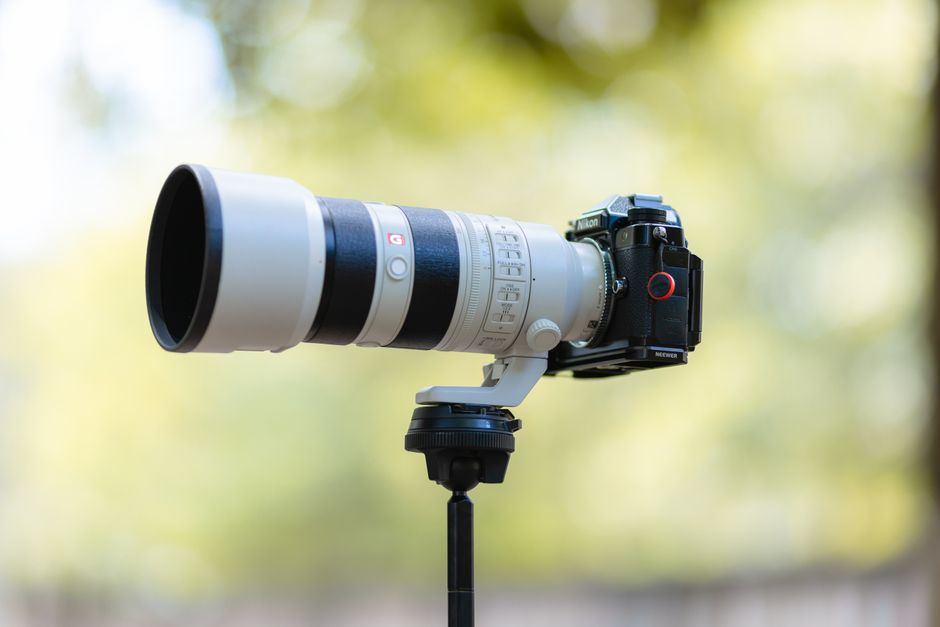
Why a Star Tracker is a Must-Have in Your Portable Astrophotography Gear List
If you have ever tried to take a photo of the stars for longer than 30 seconds, you have likely seen “star trails.” This happens because the Earth is rotating, and at longer focal lengths, that movement is magnified. This is where a star tracker—a miniature equatorial mount—becomes the most important upgrade in your portable astrophotography gear list.
A star tracker like the iOptron SkyTracker Pro or the Sky-Watcher Star Adventurer 2i rotates your camera at the exact same speed as the Earth, but in the opposite direction. This effectively “freezes” the stars in your frame.
The Tracking Advantage:
- Exposure Time: Without a tracker, you might be limited to 15-20 seconds. With a tracker, we can easily achieve 2 to 4-minute exposures.
- Lower ISO: Longer exposures mean we can use a lower ISO, which dramatically reduces the “grain” or noise in our images.
- Detail: Deep-sky objects like the Andromeda Galaxy or the Lagoon Nebula suddenly reveal colors and structures that are invisible to the naked eye.
However, using a tracker requires “polar alignment.” This involves aligning the mount’s axis with Polaris (the North Star). While it sounds technical, most modern trackers come with a built-in polar scope and smartphone apps that make the process take less than five minutes. For a deeper dive into these tools, check out Our Guide to Milky Way Photography Equipment.
We must remember that while trackers are amazing for stars, they will blur your foreground. The pro trick is to take one tracked shot for the sky and one untracked shot for the landscape, then blend them together in software.
Smart Telescopes: The Future of the Portable Astrophotography Gear List
In the last few years, a new category of gear has completely changed the game: the Smart Telescope. Devices like the ZWO Seestar S50 and the Dwarf 3 have condensed a telescope, camera, mount, and computer into a package that weighs less than 5 lbs and fits in a small backpack.
For many of us, the Seestar S50 is the best entry-level portable device. At a budget of roughly $500-$600, it offers a fully automated experience. You put it on the ground, level it, and use a mobile app to tell it which galaxy you want to see. It finds the object, centers it, and starts “live stacking” the images right before your eyes.
Pros of Smart Telescopes:
- Ultra-Portable: No heavy counterweights or complex cable nests.
- Ease of Use: Perfect for beginners who want to see deep-sky objects without learning the complexities of polar alignment or back-spacing.
- Internal Power: Most have batteries that last for several hours of imaging.
Limitations:
- Fixed Focal Length: You cannot change the “zoom” level.
- Small Sensors: While they produce incredible images for their size, they won’t match the resolution of a full-frame mirrorless camera.
If you are looking for The best portable mounts for phone astrophotography, these smart systems offer a hybrid approach that bridges the gap between smartphone snaps and professional rigs.
Advanced Optics and Compact Imaging Trains
As we progress in our hobby, we often move from wide-angle nightscapes to “deep-sky” astrophotography. This requires more specialized optics. The William Optics RedCat 51 has earned a reputation as the “perfect” starter refractor. It is ultra-compact, weighs just over 3 lbs, and functions like a high-end 250mm f/4.9 telephoto lens.
When building an advanced portable astrophotography gear list, we also need to consider the camera sensor. While DSLRs are great, dedicated astronomy cameras (CMOS) feature cooled sensors. By cooling the sensor to -10°C or -20°C, we can virtually eliminate thermal noise, which is a major hurdle during warm summer nights.
The Harmonic Drive Revolution
Traditional equatorial mounts require heavy counterweights to balance the telescope. For travel, this is a nightmare. Enter the “Harmonic Drive” or Strain Wave mounts, such as the ZWO AM5N. These mounts have a high torque-to-weight ratio, allowing them to carry a 13 lb payload without any counterweights. This is the ultimate “travel rig” for serious astronomers who want to take a professional-grade setup on an airplane.
If you are ready to make that jump, our Our Ultimate Beginners Guide to Astrophotography Equipment covers the technical nuances of back-spacing and field flatteners to ensure your stars are sharp from corner to corner.
Essential Accessories for Field Success
Here’s a truth every astrophotographer learns the hard way: the gear that saves your session is rarely the gear you spent the most money on. It’s the humble dew heater. The spare battery. The red headlamp you almost left on the kitchen counter.
Getting these small details right is what separates a productive night under the stars from a long, cold drive home with nothing to show for it.
Power Management
Astrophotography is surprisingly power-hungry. Tracking motors, cooled camera sensors, and laptops all draw current continuously — and cold temperatures make batteries drain even faster than usual. Power management deserves a real spot on your portable astrophotography gear list, not an afterthought.
The solution depends on your setup. A basic star tracker runs happily on AA batteries or a small USB power bank. A cooled astronomy camera, however, needs a proper 12V deep cycle or LiFePO4 battery to stay happy through a long session. A laptop or mini PC controlling your rig will need a portable power station in the 300Wh range or higher. Dew heaters sit somewhere in the middle — a good 10,000mAh USB power bank handles them just fine.
For most portable rigs, a 155Wh lithium-ion power station hits the sweet spot. It can keep a smart telescope or a star tracker running across multiple nights, and it’s small enough to fit in a backpack. Check out our guide to Reliable battery packs for long astrophotography sessions for specific recommendations based on your setup.
Dealing with the Elements
Dew is the silent session-killer. As temperatures fall after midnight, moisture in the air condenses on the coldest nearby surface — which is often your lens. One moment your stars are sharp; the next they look like smeared Christmas lights. Small USB-powered dew heaters wrap around your lens barrel and keep the glass just a degree or two above the dew point. They draw minimal power and weigh almost nothing. There is no good reason to leave them at home.
A red-light headlamp is equally non-negotiable. White light wrecks your night vision in an instant, and it takes a full 20 minutes for your eyes to recover. Red light lets you check your gear, adjust settings, and find your snacks without resetting that clock — or ruining the session for anyone imaging nearby.
Finally, if you’re shooting anywhere near a city, light pollution filters are worth serious consideration. They block the specific wavelengths produced by streetlamps and sodium lights, letting the natural glow of nebulae and star clusters pass through more cleanly. There are options available for DSLRs and even smartphones — our roundup of Affordable light pollution filters for smartphones is a great place to start.
One last thing worth mentioning: cable management. A tangled mess of USB cables and dew heater leads can catch on your tripod legs and nudge your mount mid-exposure. A few velcro cable ties cost almost nothing and will save you more frustration than you’d expect.
The boring accessories aren’t glamorous. But they’re what keep you imaging from dusk until dawn instead of packing up early and heading home defeated.
Maximizing Quality with Software and Techniques
Even with the best gear, the raw images coming out of the camera often look dark and unimpressive. The magic happens in the “processing” stage.
The 300 Rule
If you are shooting on a fixed tripod (no tracker), use the 300 Rule to avoid star trails. Divide 300 by your focal length to find your maximum exposure time. Example: 300 / 14mm = 21.4 seconds. If you go longer than this, the stars will start to look like little sausages instead of pinpoints.
Stacking: The Secret Sauce
Image stacking is the process of taking 30, 50, or even 100 identical photos of the same target and blending them together. Software like Sequator (for landscapes) or DeepSkyStacker (for deep-sky) aligns the stars and averages out the noise. This is how we get those silky-smooth backgrounds and vibrant colors.
Calibration Frames: To get professional results, we use “calibration frames”:
- Darks: Taken with the lens cap on to map sensor noise.
- Flats: Taken against a uniform light source to remove vignetting and dust spots.
- Bias: Taken at the fastest possible shutter speed to record the electronic “read noise” of the camera.
Frequently Asked Questions about Portable Astrophotography
How do I focus my camera at night?
Focusing at night is notoriously difficult because autofocus doesn’t work on dim stars. We use a few different techniques:
- Digital Zoom: Turn on “Live View,” find the brightest star in the sky, zoom in 10x on the screen, and manually turn the focus ring until the star is as small as possible.
- Bahtinov Mask: This is a plastic grid you place over your lens. It creates a specific diffraction pattern (an “X” with a line through it). When the line is perfectly centered, you are in focus.
- Infinity Tape: Once you find focus during the day on a distant object, use a piece of gaffer tape to lock the focus ring in place so it doesn’t move in the dark.
Can I do astrophotography in light-polluted cities?
Yes! While dark skies are better, modern filters make urban astrophotography possible. Narrowband filters (like the Optolong L-Extreme) block almost all light except for the specific gases found in nebulae (Hydrogen-alpha and Oxygen-III). This allows us to capture stunning nebulae even from a Bortle 8 backyard in the middle of a city.
What is the best way to stay warm during long sessions?
Even a 60°F (15°C) night can feel freezing when you are standing still for hours. We recommend:
- Layering: Start with a moisture-wicking base, add an insulating middle, and a wind-proof outer shell.
- Heated Vests: USB-powered heated vests are a game-changer for long winter nights.
- Remote Operation: Use a tool like the ZWO ASIAIR to control your camera from inside your car or a tent via Wi-Fi. You can monitor the progress on your tablet while staying warm and toasty.
Conclusion
Building a portable astrophotography gear list is a journey of balance. We want the best possible optics and tracking, but we also need a kit that we can actually carry to those remote, dark-sky locations where the universe truly reveals itself.
At Pratos Delícia, we believe that the best camera is the one you have with you—and the best telescope is the one you actually use. Whether you start with a budget-friendly $1000 Milky Way kit consisting of a used DSLR and a star tracker, or you jump straight into the automated world of smart telescopes, the goal is the same: to connect with the cosmos.
Start small, master your focus and alignment, and don’t be afraid to fail. Every blurry photo is just a lesson on the way to your first masterpiece. For more guides on mobile astronomy and night sky techniques, visit us at https://pratosdelicia.com/. Clear skies!
