
The Best Budget Lenses for Wide Field Astrophotography
You Don’t Need Expensive Glass to Shoot the Night Sky
Finding a great cheap astrophotography lens is totally possible — and it can open up the Milky Way, star fields, and deep-sky targets without draining your bank account.
Here are the best budget lenses for astrophotography right now:
| Lens | Price | Best For |
|---|---|---|
| Canon EF 50mm f/1.8 STM | ~$150 new | Deep-sky, constellations |
| Rokinon/Samyang 14mm f/2.8 | ~$300 used | Milky Way, wide nightscapes |
| Sony FE 50mm f/1.8 | ~$200 new | Sony full-frame wide-field |
| Samyang 135mm f/2 | ~$300 used | Deep-sky detail |
Quick tips to get the most from budget lenses:
- Stop down to f/2.8 or f/3.2 for sharper stars
- Use a portable star tracker for longer exposures
- Stack multiple exposures to reduce noise
- Shoot in RAW for better post-processing control
Most beginners assume you need to spend thousands of dollars on glass before you can shoot the stars. That’s simply not true.
The reality is that some of the most beloved astrophotography images were shot with lenses costing under $200. The famous “nifty fifty” — the Canon EF 50mm f/1.8 — costs around $150 brand new and has been used to capture stunning shots of the Orion Constellation and Barnard’s Loop.
The key insight? It’s not just what lens you buy — it’s how you use it.
A cheap lens used well will always beat an expensive lens used poorly. Stopping down the aperture, using a tracker, and stacking exposures can turn a budget kit into a serious astrophotography setup.
Below, we’ll break down the best affordable options, what to watch for when buying, and exactly how to squeeze the best results out of budget glass.

Top Picks for a Cheap Astrophotography Lens Under $200
When we talk about finding a cheap astrophotography lens, we aren’t just looking for low prices; we are looking for value. In night sky photography, “value” means a lens that can gather enough light to show the Milky Way while keeping stars looking like pinpoints rather than seagulls.
For those just starting, we often recommend looking at prime lenses. Unlike zoom lenses, primes have a fixed focal length. This simplicity usually results in better optical quality for less money. If you are still looking for a camera body to pair with these, check out our guide on the best-budget-cameras-for-astrophotography-dont-go-broke-for-the-stars.
The two heavyweights in the sub-$200 (or near it) category are the Canon EF 50mm f/1.8 STM and the Rokinon/Samyang 14mm f/2.8. While the Rokinon often sits closer to $300 new, it is a staple of the used market for around $200. These lenses represent two different worlds: the 50mm is for “zoomed-in” constellations and deep-sky regions, while the 14mm is for those epic, wide-angle Milky Way “nightscapes.”
Maximizing the Canon 50mm f/1.8 as a Cheap Astrophotography Lens
The “Nifty Fifty” is perhaps the most famous cheap astrophotography lens in existence. At around $150 brand new, it offers a massive f/1.8 aperture. However, here is a secret: just because it can shoot at f/1.8 doesn’t mean it should.
When shot wide open at f/1.8, this lens often suffers from chromatic aberration (purple fringing around bright stars) and soft corners. To get professional results, we recommend “stopping down” to f/2.8 or f/3.2. This simple adjustment dramatically improves star sharpness and reduces aberrations.
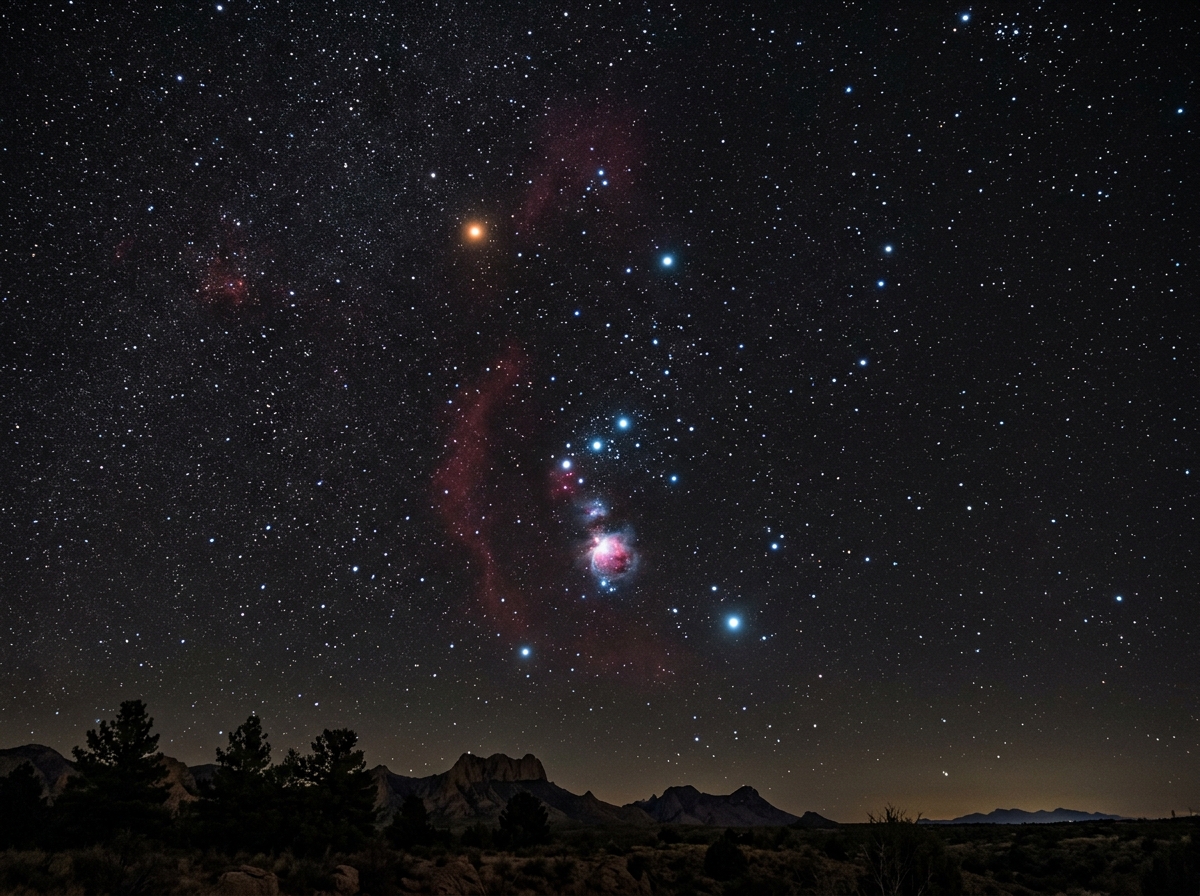
In real-world tests, using this lens on a basic tracking mount allowed photographers to capture the Orion Constellation, including the elusive Barnard’s Loop, using 3-minute exposures. It is a fantastic tool for learning how to stack images and handle post-processing without a $2,000 telescope.
Why the Samyang 14mm is a Cheap Astrophotography Lens Essential
If your goal is to capture the entire arc of the Milky Way over a mountain range, the Samyang (sold as Rokinon in the US) 14mm f/2.8 is your best friend. It is an ultra-wide-angle lens that provides a massive field of view.
While it is a manual focus lens, that is actually a benefit for us. In the dark, autofocus is useless. Having a physical focus ring with a long “throw” makes it easier to find that perfect infinity focus.
However, every cheap astrophotography lens has trade-offs. The 14mm is known for “mustache” distortion and significant vignetting (dark corners) at f/2.8. It scores about a 4 out of 10 for star quality at its widest setting, but just like the 50mm, stopping it down to f/3.2 cleans up the corners significantly. Despite these quirks, its ability to grab a huge chunk of the sky for a low price makes it a legend in the community.
Specialized Budget Optics: APO and Petzval Lenses
As you move slightly beyond standard camera lenses, you enter specialized astro-optics. Companies like SVBONY have changed the game by offering dedicated apochromatic (APO) lenses that act like mini-telescopes.
The SVBONY SV535 is a prime example. This is a 105mm f/2.8 APO lens that uses ED (Extra-low Dispersion) glass, specifically S-FPL51. This high-end glass is designed to virtually eliminate chromatic aberration, ensuring your stars don’t have those annoying purple halos.
Another fascinating option is the SVBONY SV545. It utilizes a Petzval design, which is a specialized arrangement of five lens elements. The big win here is the “native flat-field.” In most lenses, the image is slightly curved, meaning if the center is in focus, the corners might be blurry. A Petzval lens fixes this internally, giving you sharp stars from edge to edge without needing extra corrective gear.
These specialized optics often include features like helical focusers for micro-precision and are designed to be “pocket-sized,” making them perfect for travel astrophotography.
High-Performance Alternatives for Deep Sky
If you want to go deeper into the sky to photograph nebulae or galaxies, you’ll need more focal length. The Samyang 135mm f/2 is widely considered one of the sharpest lenses ever made for the price. It can often be found used for around $300 and performs exceptionally well even wide open at f/2.
For those ready to bridge the gap between a lens and a telescope, the Sharpstar FRA400C offers a quintuplet air-spaced APO design. While it is more of an investment at around $895, it provides a 44mm image circle, which is large enough to cover a full-frame sensor with perfect stars.
When shooting these deeper targets, especially from the city, we recommend using affordable-light-pollution-filters-for-smartphones or clip-in filters for your DSLR. These help block the orange glow of city lights, allowing the faint light of distant nebulae to shine through.
Technical Considerations for Affordable Glass
When shopping for a cheap astrophotography lens, you’ll encounter some technical “monsters” under the bed. Understanding these helps you choose the right gear.
- Coma: This is when stars in the corner look like little comets or birds instead of points. Most budget wide-angle lenses have some coma, but it usually disappears if you stop the lens down.
- Astigmatism: Similar to coma, this stretches stars into lines.
- Vignetting: This is the darkening of the corners. In some budget lenses, the corners can be up to 3 stops darker than the center.
| Feature | f/1.8 (Wide Open) | f/2.8 (Stopped Down) |
|---|---|---|
| Light Gathering | Maximum | 60% less |
| Star Sharpness | Soft/Blurry | Sharp/Pinpoint |
| Vignetting | Heavy | Moderate |
| Chromatic Aberration | High (Purple halos) | Low/Minimal |
For more on choosing the right focal length for your specific camera, see our guide on optimal-lenses-for-smartphone-milky-way-photos.
Mount Compatibility and Sensor Crop Factors
One of the biggest hurdles is making sure your lens actually fits your camera. Most budget lenses come in Canon EF or Nikon F mounts. If you have a modern mirrorless camera (like a Sony E-mount or Nikon Z), you can easily use an adapter.
You also need to consider your sensor size. A “full-frame” camera sees the sky exactly as the focal length suggests. However, an APS-C (crop sensor) camera effectively “zooms in.” For example, a 50mm lens on a Canon Rebel acts like an 80mm lens. This is great for deep-sky objects but makes it harder to capture wide Milky Way landscapes. For those using mobile setups, check out smartphone-lens-adapters-for-milky-way-photography to see how adapters change your field of view.
Essential Techniques to Maximize Budget Gear
The secret to making a cheap astrophotography lens look like a $5,000 telescope is technique.
1. Use a Star Tracker A portable tracker, like the iOptron SkyTracker, compensates for the Earth’s rotation. This allows you to take 2-minute or 3-minute exposures without the stars trailing. Even a cheap lens can capture incredible detail if you can leave the shutter open long enough.
2. Polar Alignment To use a tracker effectively, you must align it with the celestial pole. Most modern trackers have apps to help you do this in under 5 minutes.
3. Stacking Don’t just take one photo. Take 20! Using free software like DeepSkyStacker or Siril, you can “stack” these images together. This averages out the digital noise, making your final image look smooth and professional.
4. Remote Shutter and Cooling Touching your camera causes vibrations. Use a remote shutter release or a built-in timer. Also, give your camera a few seconds between shots to let the sensor cool down; a hot sensor creates more noise in your images. Don’t forget to stabilize your gear with affordable-tripods-for-night-sky-photography.
Frequently Asked Questions about Budget Astro Lenses
Is a star tracker necessary for cheap lenses?
Technically, no, but it is the single best upgrade you can make. Without a tracker, you are limited to very short exposures (usually under 20 seconds) to avoid star trails. A tracker allows you to use lower ISO settings and longer exposures, which results in much higher image quality.
Where can I buy reliable used astrophotography lenses?
We recommend reputable used gear dealers like KEH or B&H Photo. When buying a used cheap astrophotography lens, look for “gold ring” versions of Samyang lenses, as they often have better quality control. Check the glass for fungus or heavy scratches, but don’t worry too much about minor dust inside the lens; it rarely affects night sky images.
How do I fix purple fringing in post-processing?
Purple fringing (chromatic aberration) is common in budget glass. In software like Adobe Lightroom or Camera Raw, there is a “Lens Corrections” tab. Simply check the “Remove Chromatic Aberration” box. If that doesn’t work, use the “Defringe” eye-dropper tool to select the purple color around a star, and the software will neutralize it.
Conclusion
At Pratos Delícia, we believe that the beauty of the night sky should be accessible to everyone. You don’t need a massive budget to start your journey into the stars. By choosing a smart cheap astrophotography lens like the “Nifty Fifty” or a Samyang 14mm, and focusing on techniques like stacking and tracking, you can produce images that rival professional setups.
The best lens is the one you have with you under a dark sky. Gear is just a tool; your passion and your willingness to learn the craft of image processing are what will truly make your photos shine.
For More info about night sky photography, keep exploring our guides. Clear skies!
