
You Don’t Need to Spend a Fortune to Photograph the Night Sky
Building an affordable astrophotography setup is more achievable than most beginners think. Here’s a quick summary of what we need to get started:
The 3 core components of a budget astrophotography setup:
- Mount – A star tracker or equatorial mount (~$400-$830) to counter Earth’s rotation and prevent star trails
- Optics – A small refractor telescope or fast camera lens (~$300-$730) to gather light from deep-sky objects
- Camera – A DSLR, mirrorless, or dedicated astro camera (~$350-$600) to record what your optics collect
Complete starter rigs can be built for as little as $1,800-$2,800, depending on your goals and whether you buy used.
Not long ago, capturing nebulae and galaxies from our backyard required professional-grade equipment costing tens of thousands of dollars. That’s simply no longer true.
Digital sensors have gotten dramatically better and cheaper. Affordable star trackers now offer tracking accuracy once reserved for observatory-grade mounts. And a thriving online community means beginners have more guidance than ever.
The biggest barrier today isn’t money — it’s knowing where to start.
This guide cuts through the confusion. Whether we want to shoot wide-field Milky Way panoramas or zoom in on distant nebulae, there’s a budget setup that fits our goals.

Affordable astrophotography setup word roundup:
- best budget astrophotography camera
- budget telescope for astrophotography
- cheap astrophotography camera
The Foundation of an Affordable Astrophotography Setup: The Mount
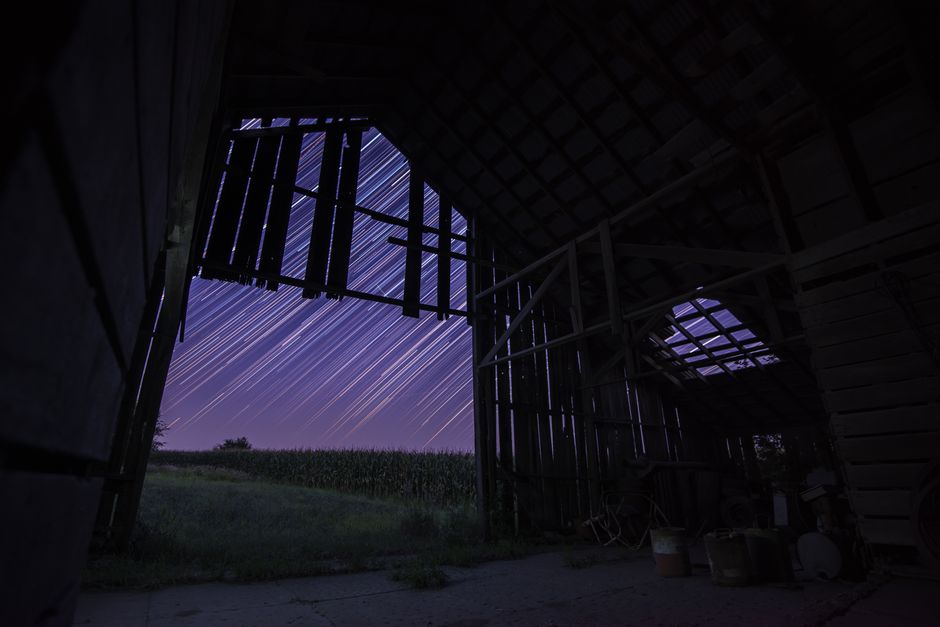
When we first catch the “astro-bug,” our instinct is to look for the biggest telescope possible. We want to see deep into the cosmos, right? But here is a secret that experienced imagers know: the mount is actually the most critical part of our affordable astrophotography setup.
The Earth is constantly spinning. While we don’t feel it, this rotation causes the stars to appear as if they are moving across the sky. If we take a long exposure with a camera on a standard tripod, the stars will turn into blurry streaks—known as star trails—in just a few seconds. To capture the faint details of a nebula, we need exposures that last several minutes.
This is where a tracking mount comes in. These motorized devices move our camera at the sidereal rate—the exact speed at which the stars move—effectively “freezing” the night sky in our viewfinder.
Why the Mount is Your Most Important Investment
We often say that a mediocre telescope on a great mount can take amazing photos, but a great telescope on a poor mount will only produce frustration. Tracking accuracy is the name of the game. Even the slightest vibration or mechanical wobble can ruin a four-minute exposure.
When building our affordable astrophotography setup, we must consider “payload capacity.” This is the maximum weight the mount can carry. A good rule of thumb for astrophotography is to never exceed 50-70% of the manufacturer’s stated weight limit. If a mount is rated for 11 lbs, we should try to keep our gear under 7 or 8 lbs for the best results.
Stability is also key. We can improve even a budget tripod by hanging a weighted bag from the center column to lower the center of gravity. For more tips on choosing a sturdy base, check out our guide on affordable tripods for night sky photography.
Best Budget Star Trackers and Mounts Under $800
Fortunately, we live in a golden age of affordable tracking. Here are our top picks for keeping our budget under control while maintaining high quality:
- Sky-Watcher Star Adventurer GTi ($740 – $830): This is often called a “Star Adventurer on steroids.” It is a full GoTo mount, meaning it can automatically find and track thousands of objects in the sky via a smartphone app. It has an 11 lb payload capacity, making it perfect for small refractors and DSLR lenses.
- iOptron SkyGuider Pro (~$400 – $450): A favorite for wide-field Milky Way shots. It is incredibly portable—it can literally fit in the palm of our hand—and features a built-in rechargeable battery that lasts up to 20 hours.
- Sky-Watcher EQ-AL55i (~$760): If we want something that feels more like a traditional equatorial mount but remains portable, this is a fantastic option. It handles a higher payload (up to 22 lbs) than the small trackers, allowing us to grow into slightly larger telescopes later.
Choosing Budget-Friendly Optics and Cameras
Once we have a solid foundation, we need the “eyes” of our rig. In an affordable astrophotography setup, bigger isn’t always better. In fact, short focal length telescopes are much more forgiving for beginners because they don’t require the extreme tracking precision that long, heavy telescopes do.
Top Telescopes and Lenses for an Affordable Astrophotography Setup
For deep-sky imaging, we generally recommend “Apochromatic (APO) Refractors.” These use high-quality glass to ensure all colors of light focus at the same point, preventing the “purple halos” around stars often seen in cheaper optics.
- SVBONY SV550 80mm Triplet (~$730): This is a powerhouse for the price. It uses FPL-51 glass to provide excellent color correction. It’s a great intermediate scope that delivers professional-looking results.
- Askar 60F (~$499): A very compact and lightweight refractor. Because it’s so light, it places very little stress on budget mounts like the Star Adventurer GTi.
- Samyang/Rokinon 135mm f/2 Lens (~$400 – $500): Don’t overlook camera lenses! This specific lens is a legend in the community. Its “fast” f/2 aperture lets in a massive amount of light, allowing us to capture bright nebulae in much shorter timeframes.
If we are still deciding on the right “scope” for our needs, we have a detailed breakdown of budget telescopes for astrophotography to help narrow it down.
Best Value Cameras Under $600
We have two main paths here: using a DSLR/Mirrorless camera we might already own, or buying a dedicated cooled astronomy camera.
| Feature | DSLR / Mirrorless | Dedicated Astro Camera |
|---|---|---|
| Cost | Low (especially used) | Moderate |
| Cooling | No (more noise) | Yes (low noise) |
| Ease of Use | High (familiar menus) | Moderate (needs a computer/controller) |
| Versatility | Can use for daytime photos | Astro-use only |
For those on a strict budget, a used Sony a6000 or a6400 ($350-$500) or a Canon Rebel T7 ($450) are fantastic starting points. They offer large sensors and great manual controls.
However, if we want to take our affordable astrophotography setup to the next level, the ZWO ASI585MC Pro (~$600) is a game-changer. Unlike a DSLR, it has a “cooled” sensor that can drop 35°C below the ambient temperature. This drastically reduces “thermal noise”—that grainy look in long exposures.
For a deeper dive into which sensors are worth our hard-earned cash, see our reviews on 6 inexpensive astrophotography cameras that actually work and which budget astro camera is actually worth your money.
Essential Accessories and Smart Control on a Budget
To get the most out of our gear, we need a few “quality of life” accessories. These don’t have to be expensive, but they make the difference between a frustrating night and a successful one.
Controlling Your Affordable Astrophotography Setup Without a Laptop
One of the biggest hurdles for beginners is the “cable mess” of connecting a camera, mount, and guider to a laptop in the dark. We can skip the laptop entirely by using a smart controller like the ASIAIR Mini (~$199 – $249).
This tiny device creates its own WiFi hotspot. We plug our camera and mount into it, and then control everything from a tablet or smartphone. It handles “plate solving” (taking a picture and automatically figuring out exactly where the telescope is pointing) and “autoguiding” with ease. It’s an essential part of a modern gear essentials for mobile night photography kit.
Autoguiding and Light Pollution Filters
If we want to take exposures longer than two or three minutes, we might need “autoguiding.” This involves a secondary, tiny telescope (a guide scope) and a small camera that watches a single star. If that star moves even a fraction of a millimeter, the software sends a correction to the mount.
- Budget Guiding Rig: A 30mm guide scope (~$99) paired with a ZWO ASI120MM Mini (~$149) is the industry standard for budget setups.
Living in the city? Light pollution can wash out the faint light of distant galaxies. A dual-band filter like the Optolong L-Extreme or the SVBONY SV220 can block out streetlights while letting the light from nebulae pass through. For smartphone users, we also have suggestions for affordable light pollution filters for smartphones.
Free Software for Post-Processing
The data we capture at night is “raw”—it looks dark and unimpressive until we process it. We don’t need an expensive Photoshop subscription to get started.
- DeepSkyStacker (Free): This software takes dozens of our individual photos and “stacks” them on top of each other to reduce noise.
- Siril (Free): A powerful processing tool that can handle everything from color calibration to “stretching” the image to reveal hidden details.
- GraXpert (Free): An AI-powered tool that is incredible at removing those ugly orange gradients caused by light pollution.
Learning these tools is just as important as the gear itself. We cover the basics in our budget astrophotography beginner’s guide.
Modular Kits vs. Smart Telescopes
Recently, “Smart Telescopes” like the ZWO Seestar S50 (~$500) have hit the market. These are all-in-one robots that handle everything—tracking, imaging, and processing—with one button.
Pros of Smart Telescopes:
- Incredibly easy to use; no learning curve.
- Very portable.
- Extremely affordable.
Cons of Smart Telescopes:
- No Upgrade Path: We can’t swap the camera or the lens. If we want better quality, we have to buy a whole new system.
- Resolution Limits: The sensors are usually smaller, and the image quality, while good, doesn’t quite match a modular affordable astrophotography setup.
- Field Rotation: Because most are “Alt-Az” mounts rather than equatorial, they can’t take very long exposures before the edges of the image start to blur.
A modular kit (where we choose the mount, scope, and camera separately) is harder to learn, but it allows us to grow. We can upgrade the camera this year and the telescope next year, spreading out the cost over time.
Frequently Asked Questions about Budget Astrophotography
Do I need autoguiding for deep-sky imaging?
Not strictly, but it helps! If we use a short focal length (like a 135mm lens or a 250mm telescope), a well-aligned mount like the Star Adventurer GTi can often track for 60-90 seconds without trailing. However, if we want those deep, 5-minute exposures, a cheap 30mm guide scope and ASI120MM Mini camera will make our lives much easier.
Can I start with just a DSLR and a tripod?
Absolutely! We can take stunning wide-field shots of the Milky Way using the “500 Rule” (dividing 500 by our focal length to find the max exposure time before stars trail). By taking many 10-20 second shots and using free stacking software, we can get our first taste of the hobby for $0 if we already own a camera.
How do I polar align a budget star tracker?
Polar alignment is the process of pointing the mount’s axis exactly at the North Star. Most budget trackers have a small “polar scope” built-in. We can use mobile apps like “PS Align” to show us exactly where Polaris should sit on the reticle based on our location and time. It usually takes about 5 minutes once we get the hang of it!
Conclusion
Starting your journey into the cosmos doesn’t have to mean draining your savings account. At Pratos Delícia, we believe that the beauty of the universe should be accessible to everyone.
By prioritizing a solid mount like the Sky-Watcher Star Adventurer GTi, picking up a versatile used DSLR or a cooled ZWO ASI585MC Pro, and utilizing free software like Siril, we can build a highly capable affordable astrophotography setup for under $2,000.
The best equipment is the gear we actually take outside. Start small, learn the sky, and don’t be afraid to look for deals on the used market. Sites like Cloudy Nights or Astromart are gold mines for budget-conscious astronomers.
Ready to take your first shot? Head over to https://pratosdelicia.com/ for more guides and gear tips to help you capture the stars without breaking the bank. Clear skies!
