
Why Night Sky Camera Settings Make or Break Your Star Photos
Night sky camera settings are the difference between a sharp, breathtaking image of the Milky Way and a blurry, noisy disappointment. Here’s what works for most beginners:
Recommended starting settings for night sky photography:
| Setting | Value |
|---|---|
| Shutter Speed | 20-25 seconds |
| Aperture | f/2.8 (or widest available) |
| ISO | 1600-3200 |
| White Balance | 4000-5000K |
| Focus | Manual, set to infinity |
| File Format | RAW |
| Mode | Manual (M) |
There is something almost magical about pointing a camera at the night sky and seeing thousands of stars appear on your screen that your eyes could barely detect. That moment hooks most photographers for life.
But getting there isn’t always easy. Long exposures, pitch-black conditions, and a camera full of unfamiliar settings can feel overwhelming at first.
The good news? You don’t need expensive gear. A basic DSLR or mirrorless camera, a wide-angle lens, and a sturdy tripod are enough to get stunning results. What matters most is understanding a handful of key settings — and why they work.
This guide breaks it all down in plain language, step by step.
Know your night sky camera settings terms:
Mastering the Exposure Triangle for Night Sky Camera Settings
When we step out into the darkness, our camera is essentially “starving” for light. In daylight, the camera has an abundance of photons to work with. At night, we have to become light hoarders. To do this effectively, we must master the exposure triangle: Aperture, Shutter Speed, and ISO.
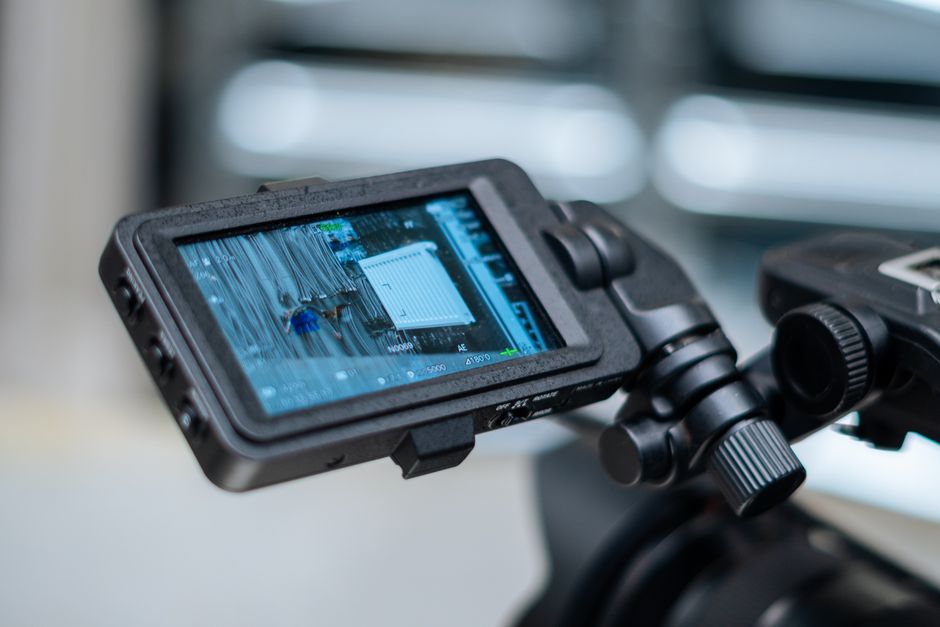
Aperture is our first line of defense. We want this as wide as possible (the smallest f-number) to let in the maximum amount of light. Most pros aim for f/2.8, though f/1.4 or f/1.8 lenses are even better if you have them. If you are using a kit lens that only goes to f/3.5, don’t worry—you can still get great shots by adjusting your other settings.
Shutter Speed is where things get tricky. We need a long exposure to gather light, but if we leave the shutter open too long, the stars will turn into blurry streaks because the Earth is constantly rotating.
ISO is the “sensitivity” of your sensor. While we usually keep ISO low to avoid “noise” (that graininess in photos), night sky photography requires pushing it higher. We generally start at ISO 1600 and may go as high as 6400 on modern full-frame cameras. For more on managing these specific levels, check out our guide on adjusting-iso-and-exposure-in-editing-for-clearer-night-sky-images.
According to Best Camera Settings for Night Photography (Complete Guide), the goal is to balance these three so your histogram peak—the “mountain” of data on your screen—sits about 1/4 to 1/3 of the way from the left. If it’s touching the far left, your photo is too dark.
Calculating Shutter Speed with the 500 Rule
As we mentioned, the Earth is spinning. If your shutter stays open too long, those tiny points of light will start to look like little sausages or “trails.” To prevent this, we use the 500 Rule.
The 500 Rule is a simple math equation to find your maximum shutter speed before motion blur occurs: 500 ÷ (Focal Length × Crop Factor) = Maximum Shutter Speed in Seconds.
- Full-Frame Cameras: If you have a 14mm lens, the math is 500 / 14 = 35.7 seconds. You can safely shoot for about 30-35 seconds.
- APS-C (Crop) Cameras: These have a “crop factor” (usually 1.5x for Nikon/Sony or 1.6x for Canon). For a 14mm lens on a Sony crop sensor: 500 / (14 × 1.5) = 23.8 seconds.
Many modern photographers find the 500 Rule a bit too generous for high-resolution sensors and prefer the 300 Rule or the NPF Rule for even sharper stars. You can use a tool like the Night Sky Planner — Astrophotography Calculator & Guide | Camera Settings to get the most accurate numbers for your specific gear.
Balancing ISO and Aperture in Night Sky Camera Settings
Once you’ve set your widest aperture and calculated your maximum shutter speed, the final piece of the puzzle is ISO. We want to use the lowest ISO possible that still reveals the stars.
Full-frame sensors are much better at handling high ISO noise because they have larger pixels that can “catch” more light. If you’re using an APS-C camera, you might notice more grain at ISO 3200 than a full-frame user would.
| Focal Length (Full Frame) | Max Shutter Speed (500 Rule) | Recommended ISO |
|---|---|---|
| 14mm | 30-35 seconds | 1600 – 3200 |
| 24mm | 20 seconds | 3200 – 6400 |
| 35mm | 14 seconds | 3200 – 6400 |
| 50mm | 10 seconds | 6400+ |
As the focal length gets longer (more zoomed in), the movement of the stars is magnified, meaning we have to use shorter shutter speeds and higher ISOs to compensate.
Essential Gear and Field Setup for Sharp Stars
You can have the perfect night sky camera settings, but if your camera shakes even a millimeter during a 20-second exposure, the photo will be ruined.
A sturdy tripod is the most important piece of gear you own. Avoid the cheap, flimsy ones that wobble in the wind. If it’s a breezy night, we recommend hanging your camera bag from the center hook of the tripod to add weight and stability.
A wide-angle lens (14mm to 24mm) is ideal because it allows for longer shutter speeds and captures a huge swath of the Milky Way. If you are shooting with a phone, you can still get amazing results by following long-exposure-tips-for-smartphone-night-photos.
Finally, we suggest using a remote shutter release or an intervalometer. If you don’t have one, simply use your camera’s built-in 2-second or 5-second self-timer. This prevents the “shake” caused by your finger pressing the button.
Achieving Sharp Focus on the Stars
Autofocus does not work in the dark. It will hunt back and forth and eventually give up. To get sharp stars, you must use Manual Focus.
- Turn your lens to manual focus (MF).
- Turn on “Live View” on your LCD screen.
- Find the brightest star in the sky (or a distant light on the horizon).
- Use the digital zoom (magnify) button on your screen to zoom in 10x on that star.
- Slowly turn the focus ring until the star becomes a tiny, sharp pinprick of light. If it looks like a blurry donut, you aren’t focused.
- Once focused, we often use a piece of painter’s tape to “lock” the focus ring so it doesn’t nudge during the night.
For more beginner-friendly focusing tips, Night-Sky and Star Photography: Tips for Beginners offers great advice on using the infinity mark as a starting point.
Composition and Foreground Elements in Night Sky Camera Settings
A photo of just stars can be beautiful, but a photo of stars over a jagged mountain, an old barn, or a lone pine tree is a masterpiece. Including foreground elements gives your photo scale and context.
We like to use “leading lines,” like a road or a fence, that points toward the Milky Way. You can also try “light painting”—briefly shining a dim flashlight on your foreground object during the exposure to bring out its detail. Just be careful not to overdo it; a little light goes a long way! Learn more about framing your night shots at capture-the-night-long-exposure-smartphone-photography.
Planning Your Shoot: Light Pollution and Moon Phases
Preparation is 90% of the work in astrophotography. You can’t just walk outside in the suburbs and expect to see the galactic core.
First, you need to find a “Dark Sky.” We use the Bortle Scale to measure light pollution. A Bortle 1 or 2 site is perfectly dark, while a Bortle 8 or 9 is a bright city center. Aim for at least a Bortle 4 for good Milky Way shots.
Second, check the Moon Phase. A full moon is so bright it “washes out” the stars, turning the sky a murky blue-grey. The best time to shoot is during a New Moon or within five days of it.
According to Photographing the Milky Way and Night Sky | Canon U.S.A., Inc., the Milky Way “season” in the Northern Hemisphere runs from April to September, which is when the bright galactic core is visible.
Advanced Techniques and Post-Processing
Once you’ve captured your images, the real “magic” happens in editing. This is why we always shoot in RAW format. RAW files contain much more data than JPEGs, allowing us to recover details from the shadows and adjust the colors without ruining the image.
White Balance is crucial. If you leave it on “Auto,” the camera might make the sky look orange or sickly green. We recommend setting a manual Kelvin value between 3800K and 4500K. This gives the sky a natural, deep blue-black look.
If your images are still too noisy, you can try Image Stacking. This involves taking 10 to 20 identical shots and using software to “stack” them. The software averages out the random noise while keeping the stars sharp. This is a pro-level secret for getting clean, “creamy” night skies.
For mobile users, there are specific apps that can help with these long exposures; check out top-mobile-camera-apps-for-long-exposure-shots for recommendations. You can also find more in-depth stacking guides at How to Photograph the Milky Way: A Complete Guide to Night Sky Photography.
Frequently Asked Questions about Night Sky Photography
Why are my stars blurry even when using a tripod?
Usually, this is because your shutter speed is too long for your focal length (violating the 500 Rule). However, it could also be caused by Image Stabilization (IS). When a camera is on a tripod, IS can actually create vibration by searching for movement that isn’t there. Always turn IS or “Vibration Reduction” (VR) OFF when on a tripod.
Can I use a kit lens for night sky photography?
Yes! While an f/2.8 lens is ideal, a kit lens (usually f/3.5 at its widest) can work. You will simply need to increase your ISO (perhaps to 3200 or 6400) to make up for the smaller aperture. The stars will still be there; your camera just has to work a little harder to see them.
Should I turn on Long Exposure Noise Reduction?
This is a personal preference. When this setting is ON, the camera takes a second “dark” exposure of the same length to subtract noise. If you take a 20-second photo, you have to wait another 20 seconds before you can take the next one. This can be frustrating and drains your battery. Most pros turn this OFF and handle noise reduction in post-processing.
Conclusion
Mastering night sky camera settings is a journey of trial and error, but the rewards are literally out of this world. By balancing your exposure triangle, respecting the 500 Rule, and focusing with precision, you can capture images that most people only see in magazines.
At Pratos Delícia, we believe that photography is one of the best ways to connect with the world—and the universe—around us. Don’t be afraid to experiment, get a little cold, and stay out a little too late. The stars aren’t going anywhere, but the perfect shot is waiting for you to find it.
Ready to try it with your phone first? Check out our guide on photographing-the-heavens-best-smartphone-settings-for-astrophotography to get started tonight!
