
Where to Go When the Lights Go Out: Dark Sky Finder
Navigating the Void: Using a Dark Site Finder
Finding the perfect dark site astrophotography locations used to involve a lot of guesswork, a paper map, and a prayer that the horizon wouldn’t be glowing orange when we arrived. Today, we have much more sophisticated tools at our fingertips.
The most critical challenge we face is skyglow—the diffuse luminance of the night sky caused by artificial light reflecting off the atmosphere. With light pollution increasing by 10% annually, the “dark” spots on the map are shrinking. This is where an interactive tool like the Map – Dark Site Finder becomes our best friend.

When we use these maps, we are looking for the “grey” or “black” zones. These represent Bortle Class 1 or 2 areas, where the Milky Way is so bright it can actually cast a faint shadow on the ground. These maps often feature:
- Geolocation: To find the closest darkness to your current position.
- Historical Layers: Selectable data from 2006 to 2022 to see how light pollution is trending in a specific area.
- Opacity Sliders: To overlay light pollution data over topographical maps, helping us find high-altitude spots.
For those of us just starting out, location-scouting-tips-for-night-sky-photos can help refine the search. It isn’t just about the darkness; it’s about the foreground. A Bortle 1 sky is incredible, but it’s even better when framed by a dramatic mountain range or an ancient rock formation.
Premier U.S. Dark Site Astrophotography Locations
The United States is home to some of the most pristine night skies left on the planet, particularly in the high desert regions of the West. These areas offer a “triple threat” for photographers: high elevation (less atmosphere to shoot through), low humidity (clearer air), and sparse populations (less light).
Goblin Valley State Park, Utah
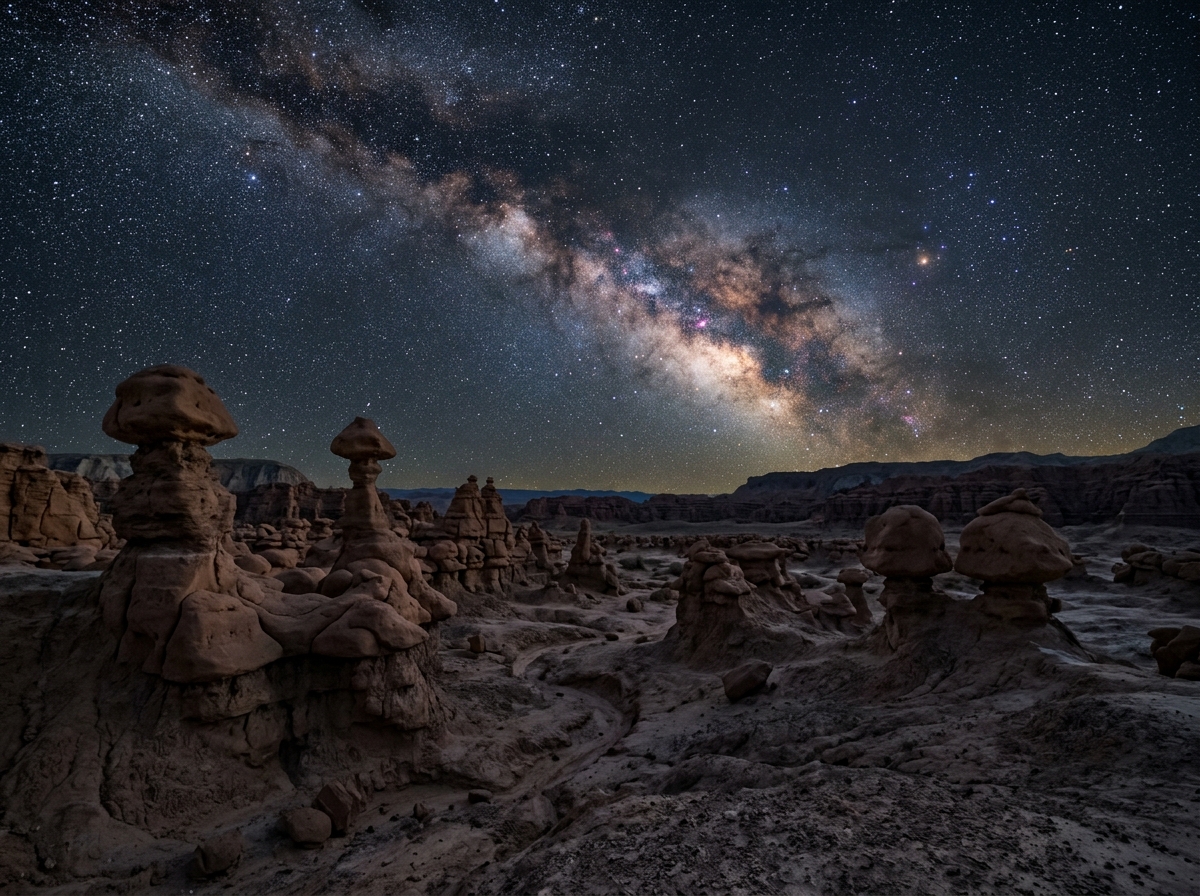
In 2015, the National Park Service’s Night Sky Team visited Utah State Parks and determined that Goblin Valley has one of the darkest night skies on Earth. It is virtually free of light pollution. The “goblins”—strange, mushroom-shaped rock pinnacles—provide some of the most surreal foregrounds you will ever find for a Milky Way panorama.
The Oregon Outback International Dark Sky Sanctuary
Certified in early 2024, the Home – Oregon Outback Dark Sky Sanctuary is currently the largest certified dark sky sanctuary in the world. Located in Lake County, this massive stretch of high desert offers Bortle 1 skies. What makes this place exceptional for us is the efficiency; exposures that might take hours in a Bortle 4 zone can be captured in just minutes here because there is zero light “noise” to filter out.
Cosmic Campground, New Mexico
Tucked away in the Gila Wilderness, this was the first International Dark Sky Sanctuary in North America. Covering 872 square miles of protected land, it is a primitive site designed specifically for stargazers. There are no permanent lights for miles, and the “no headlights” rule is strictly enforced after dark.
Goosenecks State Park, Utah
If you want a 360-degree view of the cosmos, Goosenecks State Park | DarkSky International is a must-visit. Designated in 2021, it sits 1,000 feet above the San Juan River. The lack of tall vegetation or mountains on the immediate horizon gives you an unobstructed view of the Sagittarius Star Clouds and the Andromeda Galaxy with the naked eye.
Oracle State Park, Arizona
Not every dark site requires a ten-hour trek into the wilderness. Oracle State Park | DarkSky International is located just 32 km from Tucson, yet the Santa Catalina Mountains act as a massive physical barrier that blocks the city’s skyglow. It’s an accessible dark site astrophotography location that still offers enough darkness for stunning star trails over the historic Kannally Ranch House.
Scott’s Flat Reservoir, California
For those near Northern California, Scott’s Flat Nevada City – Master The Milky Way is a fantastic Bortle Class 3 site. While not as “inky” as the Oregon Outback, it offers easy 2WD access and a sandy beach that makes setting up a tripod a breeze. You’ll need to book a campsite to stay after the day-use area closes at dusk.
Top U.S. National Parks as Dark Site Astrophotography Locations
The National Park Service has been a leader in night sky conservation. Dozens of parks have earned International Dark Sky Places | DarkSky International status.
- Arches & Canyonlands (Utah): Famous for “star-scapes” framed by natural stone arches.
- Big Bend (Texas): One of the most remote parks in the lower 48, offering incredibly deep, dark views of the southern celestial pole.
- Death Valley (California): A Gold Tier park where the vast salt flats provide a minimalist foreground for the brilliant Milky Way.
- Voyageurs (Minnesota): One of the best places to combine dark skies with a chance to see the Aurora Borealis.
- Saguaro (Arizona): Recently certified as an “Urban Night Sky Place,” showing that even parks near cities can implement lighting policies that protect the night.
Global Destinations for Pristine Night Skies
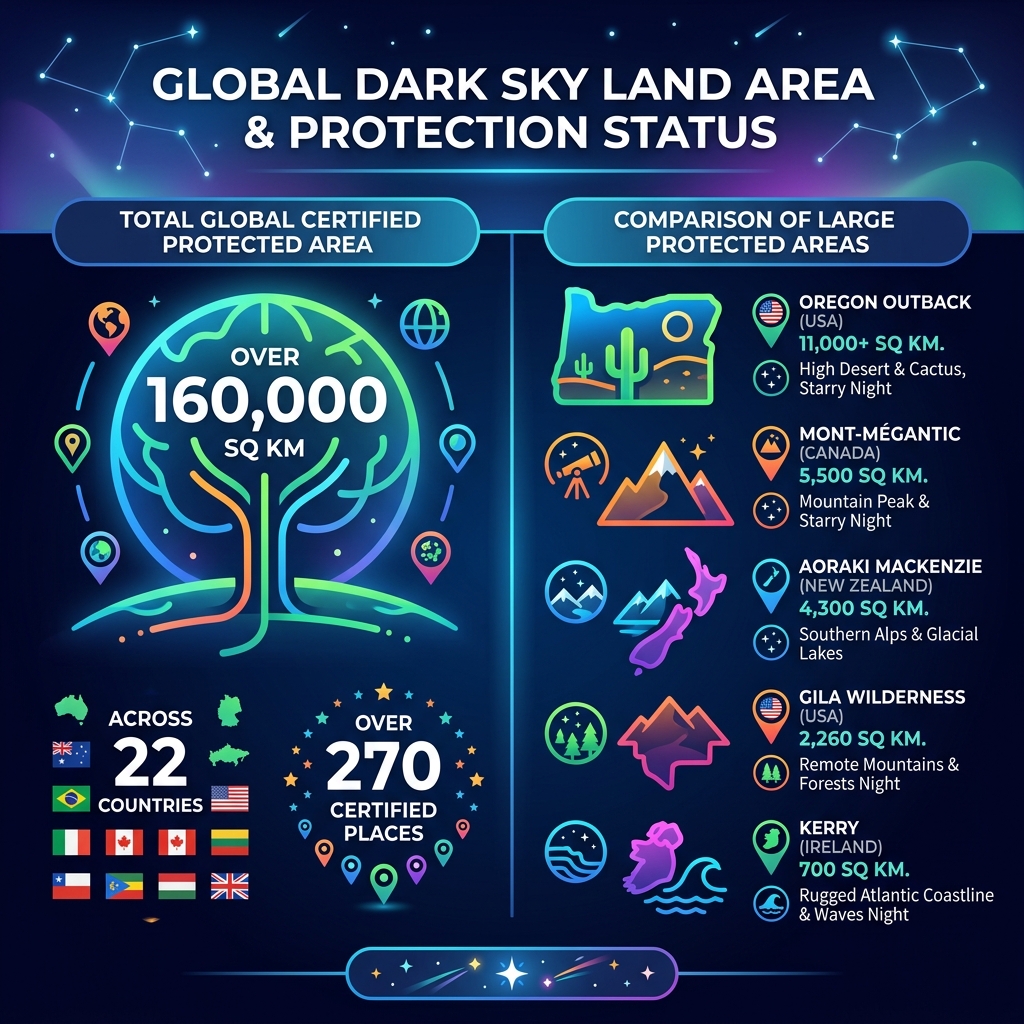
While the U.S. has incredible variety, the quest for the perfect dark site astrophotography locations often takes us across borders. Globally, there are over 270 certified places across 22 countries, protecting more than 160,000 square kilometers of darkness.
Dark Sky Møn, Denmark
In Scandinavia, Dark Sky Møn – Discover the Universe stands out. It was the first IDA-certified Dark Sky Park in Denmark. The white chalk cliffs of Møns Klint reflecting the starlight provide a ghostly, beautiful contrast for long-exposure photography.
Aoraki Mackenzie, New Zealand
Located in the South Island, this is a massive Dark Sky Reserve. It is legendary among astrophotographers for the clarity of the Southern Hemisphere sky, including the Large and Small Magellanic Clouds, which aren’t visible from the North.
Niue and the Pitcairn Islands
If you want to go truly remote, these island nations are some of the only entire countries to be certified as Dark Sky Nations or Sanctuaries. With almost zero local light pollution and thousands of miles of ocean in every direction, the sky is breathtakingly dark.
International Gems for Dark Site Astrophotography Locations
When traveling internationally, we often look for sites that combine IDA certification with unique cultural or natural landmarks.
- Møns Klint (Denmark): Use the local meteor camera data to time your shoot during high-activity periods.
- Fanefjord Church (Denmark): A perfect example of how a historic building can serve as a stunning foreground for the Milky Way.
- Lake Tekapo (New Zealand): Home to the Church of the Good Shepherd, perhaps the most photographed “starry” building in the world.
To help you plan your international “astrotrip,” here is a comparison of some of the largest protected areas:
| Sanctuary/Reserve | Country | Land Area (Approx) | Primary Feature |
|---|---|---|---|
| Oregon Outback | USA | 11,000+ sq km | High Desert/Bortle 1 |
| Aoraki Mackenzie | New Zealand | 4,300 sq km | Southern Alps/Glacial Lakes |
| Gila Wilderness | USA | 2,260 sq km | Remote Mountain Wilderness |
| Mont-Mégantic | Canada | 5,500 sq km | First International Reserve |
| Kerry | Ireland | 700 sq km | Rugged Atlantic Coastline |
Essential Gear and Preparation for Dark Site Astrophotography Locations
Heading into a Bortle 1 or 2 zone requires more than just a camera. Because these sites are often remote, preparation is a matter of both safety and photographic success.
1. The “Must-Haves” for Your Kit:
- Sturdy Tripod: In a dark site, you’ll be doing long exposures (15–30 seconds or more). Even a tiny bit of wind can ruin a shot if your tripod isn’t rock-solid.
- Red Light Headlamp: White light ruins your night vision (and the shots of anyone nearby). Red light allows you to see your dials without resetting your eyes’ adaptation to the dark.
- Wide-Angle Lens: A lens with an aperture of f/2.8 or wider is ideal for gathering as much light as possible.
- Remote Shutter/Intervalometer: To prevent camera shake when you press the button.
2. Smartphone Astrophotography: Don’t have a DSLR? You can still participate! Check out the-best-locations-for-capturing-the-milky-way-with-your-smartphone for tips on using “Night Mode” and small mobile tripods to get great results.
3. Lodging and Comfort: Many dark sites now offer “Astrotourism” amenities.
- Glamping: Sites like Under Canvas (near Lake Powell and Bryce Canyon) offer “Stargazer” tents with clear viewing panels over the bed.
- Primitive Camping: At places like Cosmic Campground, you’ll need to bring your own water, food, and first aid.
- Warm-Temperature Luminaires: If you are staying at a certified Dark Sky Lodge, you’ll notice the lights are dim and warm-toned (amber) to minimize skyglow.
Maximizing Your Shoot: Timing and Accessibility
The best dark site astrophotography locations in the world won’t help you if you show up during a full moon. To get those deep-space details, we have to plan around the celestial calendar.
The New Moon Phase: This is the “Golden Window” for astrophotography. For about five days before and after the New Moon, the sky is at its darkest because the moon isn’t reflecting sunlight into the atmosphere.
Astronomical Twilight: This is the period when the sun is between 12 and 18 degrees below the horizon. Only after astronomical twilight ends is the sky truly dark. You can use apps like “Clear Outside” to find the exact minute this happens at your coordinates.
Ranger-Led Programs and Events: If you’re nervous about navigating a dark park at night, look for star parties!
- Goblin Valley offers moonlit hikes and telescope tours.
- Goosenecks hosts dark sky parties where experts bring high-powered telescopes for public use.
- Flagstaff, Arizona (the world’s first Dark Sky Community) is home to the Lowell Observatory, where you can take guided tours of the facility that discovered Pluto.
For a full breakdown of how to schedule your trip, see our planning-your-night-sky-photography-shoot-a-guide.
Frequently Asked Questions about Dark Sky Sites
What is the best moon phase for astrophotography?
The New Moon is the best phase. During this time, the moon is not visible in the sky, providing the darkest possible conditions for capturing faint stars and the Milky Way.
How do I find a certified Dark Sky Park near me?
You can use the Dark Sky Place finder | DarkSky International tool. It allows you to filter by country, state, or type of designation (Park, Reserve, or Community).
What is the difference between a Dark Sky Reserve and a Sanctuary?
A Dark Sky Reserve consists of a dark “core” zone surrounded by a populated periphery where lighting is controlled. A Dark Sky Sanctuary is typically the most remote and darkest of all locations, often situated in very sparsely populated areas where the darkness is a fragile resource.
Conclusion
At Pratos Delícia, we believe that the night sky is a shared heritage that deserves our protection. As light pollution continues to grow, seeking out dark site astrophotography locations becomes more than just a hobby—it becomes a way to witness the universe as our ancestors did.
Whether you are heading to the “mile-high” silence of the Oregon Outback or the hoodoos of Utah, remember to follow “dark sky etiquette.” Dim your lights, use red filters, and take nothing but photos. The stars are waiting for you, but they only show themselves when the lights go out.
For more guides on capturing the world around you, visit us at https://pratosdelicia.com/.
