
The Best Apps for Star Photography in 2026: A Quick Guide
The best apps star photography enthusiasts rely on in 2026 cover everything from planning your shoot to capturing long exposures right from your phone. Whether you’re trying to frame the Milky Way over a mountain or track the ISS across the sky, the right app makes all the difference.
Here are the top star photography apps at a glance:
| App | Best For | Platform | Price |
|---|---|---|---|
| PhotoPills | Shot planning, Milky Way, AR | iOS & Android | $10.99 |
| SkySafari 7 Pro | Overall stargazing, telescope control | iOS & Android | Paid |
| Stellarium Mobile | Real-time sky identification | iOS & Android | Free / Plus upgrade |
| Star Walk 2 | Beginners, AR sky maps | iOS & Android | Free / Plus |
| NightCap Camera | Long exposures, star trails (iOS only) | iOS | $2.99 |
| StarCaster | Weather & clear sky forecasting | iOS | Free / Premium |
Night sky photography is genuinely hard for beginners. You’re dealing with total darkness, tricky manual settings, and celestial objects that move. Missing the Milky Way window by even 30 minutes can mean a wasted trip.
The good news? A handful of apps solve almost every one of these problems — and most cost less than a coffee.
Essential Planning Tools: The Best Apps Star Photography Pros Use
If you’ve ever stood in a beautiful field at 2 AM wondering why the Milky Way is behind a giant oak tree instead of over the lake, you know that hope is not a strategy. Planning is the secret sauce of every legendary night shot. Before we even pack our tripods, we need to know exactly where the stars will be.
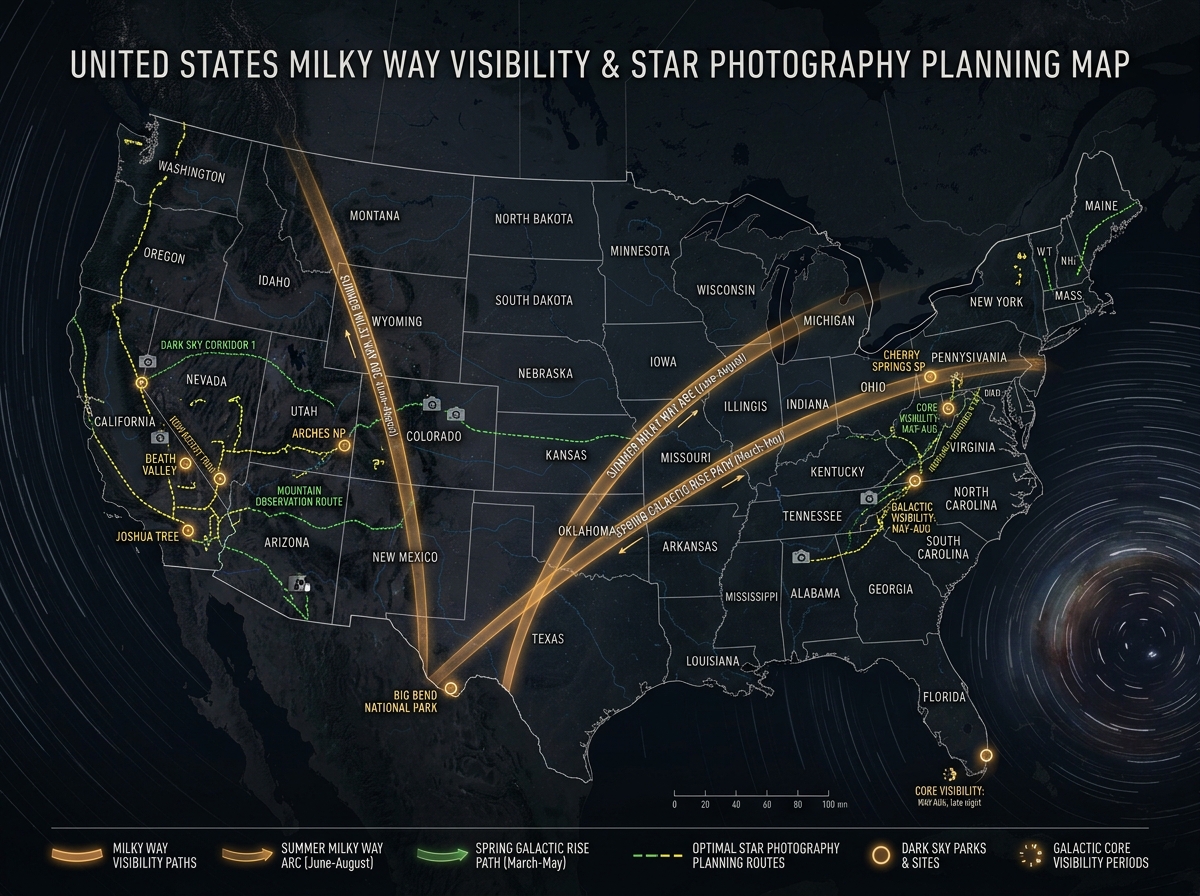
The best apps star photography pros use focus heavily on the “Imagine, Plan, Shoot” workflow. This means visualizing a shot in your head, using an app to find the exact date and time that alignment occurs, and then heading out with confidence. Effective planning involves understanding moon phases (to avoid washing out the stars) and enhancing-milky-way-shots-on-mobile-the-best-apps/ by knowing when the galactic center is most visible.
PhotoPills: The Best Apps Star Photography Planning Suite
Often called the “Swiss Army Knife” for photographers, PhotoPills | Shoot legendary photos is arguably the most powerful tool in our arsenal. For a one-time cost of $10.99, it provides features that would otherwise require multiple subscriptions.
The core of the app is the 2D Map-Centric Planner. It allows us to place a pin anywhere on Earth and see exactly where the Sun, Moon, and Milky Way will rise and set. But the real magic happens with the 3D Augmented Reality (AR) mode. You can stand in a location during the day, hold up your phone, and see the path of the Milky Way overlaid on the actual landscape. It’s like having x-ray vision for the future sky.
For those of us worried about technical settings, the app includes a “Spot Stars” calculator. This helps us use the 500-rule (or the more accurate NPF rule) to determine the maximum exposure time before stars start looking like blurry lines instead of sharp points. With a database of over 10,500 Points of Interest, you can even find new locations to scout.
StarCaster and Weather Apps for Clear Skies
The biggest enemy of any astrophotographer isn’t a lack of gear—it’s clouds. We’ve all been there: you drive two hours to a dark sky site only to find a thick blanket of gray. This is where Download StarCaster Night Sky Astronomy app for iPhone and iPad comes in.
StarCaster is an intelligent forecasting tool that goes beyond your standard weather app. It focuses on “seeing conditions”—a combination of cloud cover, transparency, and atmospheric stability. It provides high-quality personalized forecasts and even features an in-app chat community where we can talk shop with other astronomers.
Other essential weather resources include:
- Clear Outside: Known for its “sometimes depressing” but highly accurate cloud charts.
- Astrospheric: Offers detailed weather map layers that show exactly how cloud cover is moving in your specific location.
- Light Pollution Maps: Essential for finding “dark sky” pockets where the Milky Way will actually pop in your photos.
Top Planetarium Apps for Real-Time Sky Identification
Once you’re out in the field, identifying what you’re looking at is the next challenge. Is that bright light Jupiter, or just a very enthusiastic satellite? Planetarium apps turn your smartphone into a window to the universe using your phone’s gyroscope and GPS.
By simply pointing your device at the sky, these apps overlay constellations, planets, and deep-sky objects in real-time. This is vital for best-apps-to-track-stars-and-planets-on-your-mobile/ and ensures you are pointing your camera in the right direction for that perfect composition.
SkySafari 7 Pro: Best Apps Star Photography Overall Winner
If you want the absolute gold standard, SkySafari 7 Pro is widely considered the best stargazing app overall. It doesn’t just show you the sky; it provides a professional-grade astronomical database. One of its standout features is telescope control. If you have a compatible GOTO telescope (like those using Celestron StarSense), SkySafari can literally drive the telescope to any object you tap on the screen.
The “SkyCast” feature allows us to share our sky view with other users in real-time, making it a fantastic tool for photography groups. It works seamlessly on both Android and iOS, making it a versatile choice for any kit. You can find more details on its 2026 updates at Best stargazing apps 2026: A helping hand for skywatchers – Space.
Stellarium Mobile and Star Walk 2
For those who prefer a more minimalist or beginner-friendly interface, top-apps-for-mobile-astrophotography/ often highlights Stellarium and Star Walk 2.
Stellarium Mobile is beloved for its realism. The “Plus” version is a beast, displaying objects as faint as magnitude 22 and featuring a catalog of 1.69 billion stars from the Gaia DR2 database. It’s particularly useful for offline use in remote areas where you won’t have a cell signal. It also supports telescope control via WiFi, making it a strong competitor to SkySafari for a slightly lower price point.
Star Walk 2 Plus is perhaps the most “beautiful” app in the category. It features stunning 3D models of planets and nebulae, accompanied by relaxing atmospheric music. It’s perfect for beginners because it includes interactive stories and quizzes that make learning the constellations feel like a game rather than a science project. It also tracks the ISS and comets with high precision.
Specialized Camera Apps for Long Exposures and Star Trails
Most standard phone camera apps are… let’s be honest, pretty terrible for stars. They often cap your shutter speed at 10 or 15 seconds, which isn’t enough to capture the faint glow of a nebula or the intricate details of the Milky Way. To get around this, we use specialized camera apps that unlock the full potential of our mobile hardware.
These apps allow for top-mobile-camera-apps-for-long-exposure-shots/ by simulating long exposures through frame stacking or by simply pushing the ISO limits. They also help with eradicating-noise-from-night-photos-using-apps/ by using AI-driven noise reduction algorithms.
NightCap Camera for iOS Users
For iPhone and iPad users, NightCap Camera app for iPhone and iPad is a revelation. It features a unique “ISO Boost” that allows for 4x higher ISO than any other app, producing significantly brighter low-light photos.
What makes NightCap one of the best apps star photography fans can buy are its dedicated “One-Tap” modes:
- Stars Mode: Automatically sets the best exposure for a clear shot of the night sky.
- Star Trails Mode: This is a game-changer. It keeps the shutter open (metaphorically) and stacks images in real-time so you can watch the star trails form on your screen.
- ISS Mode: Specifically designed to capture the International Space Station as a bright streak of light.
- Meteor Mode: A “waiting” mode that triggers only when it detects a sudden flash of light, like a shooting star.
It even supports 4K time-lapse, allowing you to create those stunning videos of the sky rotating over a landscape.
Advanced Tools for Equipment Control and Polar Alignment
As we move from “casual snapper” to “dedicated astrophotographer,” our gear usually grows. We start using equatorial mounts to cancel out the Earth’s rotation, allowing for exposures that last minutes instead of seconds. However, these mounts need to be perfectly aligned with the celestial pole.
Using a smartphone for deep-sky-enhancement-with-mobile-applications/ often involves connecting the phone to the mount or telescope. Advanced apps can handle “plate solving”—taking a photo of the stars and comparing it to a database to tell the telescope exactly where it’s pointing.
Apps like Polar Scope Align Pro are essential for this. They show you exactly where to place Polaris (or the Octans for our friends in the Southern Hemisphere) in your polar scope based on your exact GPS coordinates and time. Without this precision, long-exposure deep-sky photography is nearly impossible.
According to expert guides like The 20 Best Astronomy Apps in 2026 | Night Sky & Stargazing, integration is the future. Many of us now use devices like the ASIAIR, which creates a WiFi hotspot that allows us to control our entire camera, mount, and autoguider setup directly from a tablet. It turns a complex scientific operation into something that feels as easy as playing a mobile game.
Frequently Asked Questions about Star Photography Apps
Are free star photography apps as accurate as paid versions?
In our experience, “you get what you pay for” holds true here. While free versions of Stellarium or Star Walk 2 are excellent for identifying major constellations, they often lack the deep-catalog data required for serious photography.
Paid versions usually offer:
- Higher Magnitude Stars: Seeing millions more stars, which is vital for framing deep-sky objects.
- Offline Functionality: Most free apps require a data connection to load high-res maps.
- Hardware Integration: Free apps rarely support telescope control or advanced camera settings.
Check out top-apps-for-mobile-astrophotography-2/ for a deeper dive into which budget options are worth your time.
Which apps are best for beginners versus advanced astrophotographers?
For beginners, we recommend starting with Star Walk 2 or the base version of Stellarium. They are intuitive and help you learn the “lay of the land.” Adding adding-clarity-to-constellation-photos-with-mobile-apps/ is much easier when the app is doing the heavy lifting of identification for you.
Advanced users will find more value in PhotoPills for planning and SkySafari 7 Pro for equipment control. These apps have steeper learning curves but offer professional-level precision that beginners might find overwhelming.
Do these apps work without an internet connection?
The best apps star photography enthusiasts use are designed with remote locations in mind. Apps like Stellarium Plus and SkySafari allow you to download their entire databases (up to several gigabytes) to your device.
This is critical because the best star photography happens far away from city lights, where cell service is often non-existent. GPS tracking works independently of the internet, so your phone can still tell exactly where you are and what stars are above you. For more on managing your mobile storage for these apps, see galaxy-photos-enhancement-made-easy-with-phone-apps/.
Conclusion
Capturing the beauty of the cosmos used to require thousands of dollars in specialized equipment and a degree in astrophysics. In 2026, the best apps star photography has to offer have leveled the playing field. From the precision planning of PhotoPills to the AI-assisted long exposures of NightCap Camera, your smartphone is now a legitimate tool for celestial art.
At Pratos Delícia, we believe that everyone should have the chance to look up and capture a piece of the infinite. Once you’ve captured your raw shots, don’t forget to master-mobile-editing-techniques-for-astrophotography/ to really make those galaxies glow.
Ready to start your journey? Grab your tripod, download your favorite app from our list, and head out into the night. The stars are waiting for you! For more tips on mobile creativity, visit us at https://pratosdelicia.com/.
