
Pro Camera Settings for Stars and the Night Sky
Why the Right Settings for Photographing Stars Make or Break Your Shot
The settings for photographing stars come down to three core adjustments you can make right now:
| Setting | Recommended Value |
|---|---|
| Aperture | f/2.8 (or your widest available) |
| Shutter Speed | 20-25 seconds (use 500 ÷ focal length) |
| ISO | 1600-3200 (up to 6400 in very dark skies) |
| Format | RAW |
| White Balance | 3200K-4000K |
| Mode | Manual (M) |
The night sky is one of the most rewarding things you can photograph. But it’s also one of the most technically demanding.
Point your camera at the stars without the right settings, and you get black frames, blurry streaks, or images so noisy they look like static. It’s frustrating — especially when the sky looks incredible to your naked eye.
Here’s the thing: your camera can actually capture far more than your eyes can see. Stars, colors, and the faint glow of the Milky Way all become visible in a single 20-second exposure. But only if your settings are dialed in correctly.
The good news? You don’t need expensive gear. A basic DSLR or mirrorless camera, a wide-angle lens, and a sturdy tripod are enough to get stunning results.
This guide walks you through every setting, step by step.
Settings for photographing stars vocabulary:
Essential Camera Settings for Photographing Stars
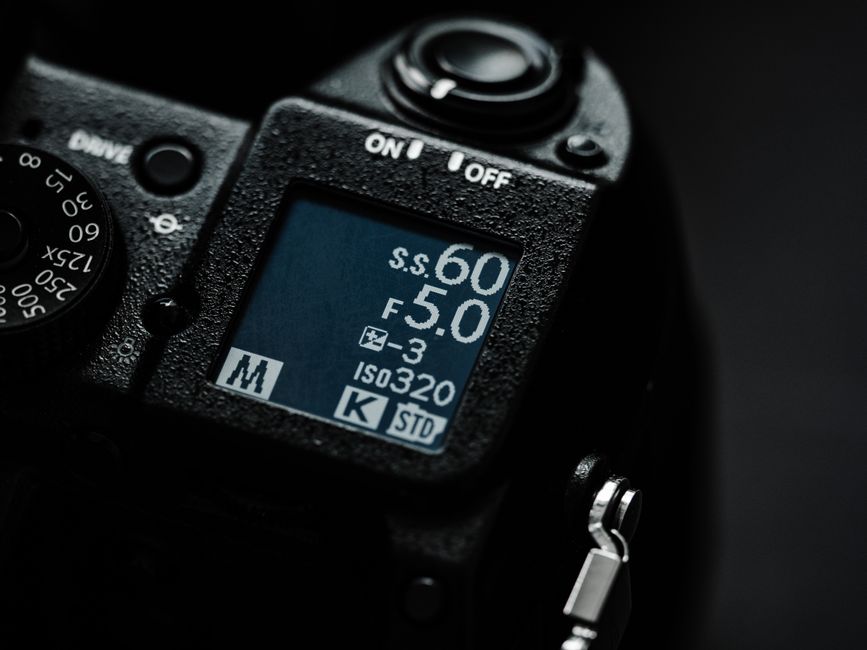
When we head out into the darkness, the first thing we must do is flip that mode dial to Manual (M). In astrophotography, the camera’s “Auto” mode is essentially blind. It will try to fire a flash (which won’t reach the stars, we promise) or give up entirely. By taking control, we tell the camera exactly how much light to let in.
The Core Pillars: Aperture, ISO, and RAW
To master mastering your camera settings for low-light photography, we need to understand that light is our most precious resource.
- Aperture: We want this wide open. If your lens goes to f/2.8, use it. If it goes to f/1.4, even better. This allows the maximum amount of light to hit the sensor.
- ISO: This is the “sensitivity” of your sensor. For stars, we typically start at ISO 1600. In truly dark, “Bortle Class 1” skies, you might push to 3200 or 6400. While high ISO can introduce noise, it’s necessary to “see” the faint light of distant galaxies.
- RAW Format: This is non-negotiable. Shooting in RAW preserves all the data captured by the sensor. When you get home and start adjusting ISO and exposure in editing for clearer night sky images, RAW files give you the “headroom” to pull detail out of the shadows without the image falling apart.
White Balance and Color
While you can change this later in RAW, setting your White Balance to a Kelvin value between 3200K and 4000K helps the sky look naturally blue or neutral rather than an ugly orange or muddy brown.
Full-Frame vs. APS-C: A Quick Comparison
The size of your camera sensor changes how you apply these settings. Full-frame sensors have larger pixels that “drink” more light with less noise. APS-C (crop) sensors are smaller and require a bit more care.
| Feature | Full-Frame (e.g., Canon 6D, Nikon Z7) | APS-C / Crop (e.g., Sony a6000, Fuji X-T4) |
|---|---|---|
| Typical ISO | 3200 – 6400 | 1600 – 3200 |
| Noise Level | Lower | Higher |
| Effective Focal Length | True to lens | 1.5x or 1.6x multiplier |
| Max Shutter Speed | Longer (approx. 25-30s) | Shorter (approx. 15-20s) |
Optimal Shutter Settings for Photographing Stars
The trickiest part of settings for photographing stars is the shutter speed. We want a long exposure to gather light, but there’s a catch: the Earth is spinning.
If we leave the shutter open too long, those crisp pinpoints of light turn into blurry dashes known as star trails (caused by the Earth’s rotation). While trails can be a cool artistic choice, most of us want sharp stars. Generally, we aim for a window of 15 to 30 seconds.
When photographing the Milky Way, you’ll find that 20 seconds is often the “sweet spot” for 14mm to 20mm lenses on a full-frame body.
Choosing the Right Lens and Aperture
Not all lenses are created equal for the night sky. We want a wide-angle lens (focal length of 35mm or less, ideally 14mm to 24mm). Wide lenses allow us to capture a huge swath of the sky and, more importantly, they allow for longer shutter speeds before star trailing becomes visible.
When choosing a lens, look for:
- Maximum Aperture: f/2.8 is the gold standard.
- Coma Correction: Some lenses make stars at the edges look like tiny seagulls. High-quality “pro” lenses or specific astrophotography primes (like those from Rokinon or Sigma) minimize this.
- Edge Sharpness: You want the stars in the corners to be just as sharp as the ones in the center.
Calculating Exposure: The 500 Rule and Sensor Size
How do we know the exact second the stars will start to blur? We use the 500 Rule.
The formula is simple: 500 ÷ (Focal Length × Crop Factor) = Maximum Shutter Speed.
The 500 Rule in Action
- Full-Frame (1.0x Crop): If you use a 20mm lens, 500 / 20 = 25 seconds.
- APS-C (1.5x Crop): If you use that same 20mm lens, 500 / (20 × 1.5) = 16.6 seconds.
Many modern photographers now prefer the 400 Rule or even the NPF Rule for high-resolution sensors, as they are more conservative and ensure even sharper results. If your stars look like tiny eggs instead of circles, try shaving 5 seconds off your exposure time.
Shutter Speed Cheat Sheet
To make your life easier, here are some common focal lengths and their max shutter speeds for pinpoint stars:
- 14mm: 30-35 seconds
- 18mm: 25-28 seconds
- 24mm: 20 seconds
- 35mm: 14-15 seconds
- 50mm: 10 seconds (Yes, it’s that fast!)
Managing ISO and Noise Reduction
High ISO is a necessary evil. To keep your images clean, we recommend turning off In-Camera Noise Reduction and Long Exposure Noise Reduction. Why? Because Long Exposure NR takes a second “dark frame” after your shot, doubling your wait time. It’s much more efficient to handle noise during post-processing.
If you find your images are still too “grainy,” the secret isn’t lowering the ISO—it’s gathering more light or using stacking techniques, which we’ll cover shortly.
Mastering Focus and Composition in the Dark
The biggest reason for “failed” star photos isn’t the ISO; it’s bad focus. In the dark, your camera’s autofocus is useless. It will “hunt” back and forth and never lock onto a star.
Manual Focus Settings for Photographing Stars
- Switch to Manual Focus (MF): Do this on the lens barrel or in the camera menu.
- Use Live View: Turn on your rear screen and find the brightest star in the sky (or a distant street light).
- Digital Zoom: Use the 5x or 10x magnification tool on your screen to zoom in on that star.
- The “Pinpoint” Method: Slowly turn your focus ring until the star becomes the smallest, sharpest point possible. If it looks like a “donut” or a blurry blob, you aren’t there yet.
- Tape it Down: Once you find focus, use a small piece of gaffer tape to secure the focus ring. It’s incredibly easy to bump it in the dark!
Composition: More Than Just Sky
A photo of just stars is a map; a photo of stars with a foreground is art. Use the Rule of Thirds to place the horizon on the bottom third of the frame. Include a silhouette of a mountain, a lonely tree, or a rocky outcrop to give the viewer a sense of scale.
If you’re just starting out and don’t have a DSLR yet, you can still practice starry night: how to photograph stars with your phone to learn the basics of framing.
Planning Your Shoot: Gear, Apps, and Conditions
Success in astrophotography is 70% planning and 30% execution. You can have the best settings for photographing stars, but if there’s a full moon or heavy clouds, you won’t see a thing.
The Ideal Conditions
- The Moon: You want a New Moon phase (or the days immediately before and after). A bright moon acts like a giant lightbulb, washing out the faint stars and the Milky Way.
- Weather: Check for low humidity and zero cloud cover. Apps like Clear Outside are great for this.
- Light Pollution: Get away from the city. Use a light pollution map to find “Dark Sky Parks” or Bortle Class 1-3 zones. If you’re new to sky darkness ratings, the Bortle scale is a helpful reference for understanding how local light pollution affects what your camera can capture.
Essential Gear Checklist
- Sturdy Tripod: A carbon fiber tripod is ideal for dampening vibrations.
- Remote Shutter Release: Pressing the shutter button with your finger causes “camera shake.” If you don’t have a remote, use the camera’s built-in 2-second or 10-second timer.
- Red Headlamp: Red light doesn’t ruin your night vision like white light does.
- Lens Heater: If you’re shooting in a humid or cold area, a USB-powered lens heater prevents dew from forming on your glass.
- Extra Batteries: Long exposures and cold nights drain batteries fast. Keep spares in your pocket to keep them warm.
For more on the perfect window of opportunity, check our timing tips for capturing stars.
Essential Apps for Night Sky Planning
- PhotoPills: The “Swiss Army Knife” for photographers. It tells you exactly where the Milky Way will be at any given time.
- Stellarium: A free planetarium app that helps you identify constellations and planets.
- The Photographer’s Ephemeris (TPE): Excellent for calculating moonrise and moonset times.
Advanced Techniques: Stacking and Star Trails
Once you’ve mastered the basic settings for photographing stars, you might want to push the boundaries of what your sensor can do.
Image Stacking for Noise Reduction
Instead of taking one 20-second photo at ISO 6400, we can take ten 20-second photos at ISO 6400 and “stack” them using software like Sequator (Windows) or Starry Landscape Stacker (Mac). This process averages out the digital noise, leaving you with a silky-smooth sky and incredible detail.
Creating Star Trails
If you want those long, hypnotic circles around Polaris, you have two options:
- The Single Long Exposure: Setting your camera to “Bulb” mode and leaving it open for 30+ minutes. (Warning: This generates a lot of sensor heat and noise).
- The Stacked Method: This is the modern way. Take 50 to 100 consecutive 30-second shots and blend them using StarStaX. This prevents noise and gives you more control.
Even if you are using a mobile device, you can experiment with photographing the heavens: best smartphone settings for astrophotography to get a feel for how long exposures work.
Light Painting
Want your foreground to pop? Use a dim flashlight or your phone screen to “paint” a tree or rock with light during the exposure. A little goes a long way—just a 1-2 second “swipe” of light is usually enough!
Frequently Asked Questions about Settings for Photographing Stars
What is the 500 Rule for star photography?
The 500 Rule is a formula used to calculate the longest shutter speed you can use before stars start to look like lines instead of points. You divide 500 by your lens’s focal length (adjusted for crop factor). For example, a 24mm lens on a full-frame camera allows for a 20-second exposure (500 / 24 = 20.8).
How do I stop my stars from looking like blurry lines?
This is usually caused by one of two things: either your shutter speed is too long (violating the 500 Rule) or your tripod moved. Ensure your tripod is on solid ground, disable Image Stabilization (IS/VR) on your lens, and use a 2-second timer to avoid shaking the camera when you press the button.
Can I photograph stars with a kit lens?
Absolutely! While an f/2.8 lens is ideal, a standard 18-55mm kit lens can still work. Set it to 18mm, use an aperture of f/3.5, and bump your ISO to 3200 or 6400. You might have a bit more noise, but you will definitely capture the stars.
Conclusion
At Pratos Delícia, we believe that the beauty of the night sky should be accessible to everyone. Mastering settings for photographing stars is a journey of trial and error, but once you see that first clear image of the Milky Way on your camera screen, you’ll be hooked for life.
Remember the basics: Manual Mode, a wide aperture, and the 500 Rule. Don’t be afraid of high ISO, and always shoot in RAW. Most importantly, get out there and practice! The stars aren’t going anywhere, but the perfect clear night is a gift—don’t let it go to waste.
Ready to take your skills to the next level? Start your astrophotography journey today and explore more of our guides on capturing the world in low light. Happy shooting!
